
Why Points Are Better Than Cashback (and Why You’ll Travel Further Because of It)

This site is part of an affiliate sales network and receives compensation for sending traffic to partner sites. This compensation may impact how and where links appear on this site. This site does not include all financial companies or all available financial offers.
People often ask me why I prefer points over cashback — especially when cashback feels so simple and straightforward. I get it. Seeing a flat percentage show up in your account feels tangible and easy. But if you love to travel, you’re leaving serious value (and unforgettable experiences) on the table.
Are points better than cashback?
For travelers — yes. While cashback offers a fixed return (usually 1–2%), points and miles can deliver 2–6x more value when redeemed strategically for flights and hotels. In short: cashback saves money; points unlock more value, making your money go further.
Why Points and Miles Offer More Value Than Cashback
Let’s break it down. Cashback rewards are simple — you earn a fixed percentage (like 1.5%) back on everything you buy. It’s predictable but capped.
Points, on the other hand, can multiply in value depending on how you use them. That’s because not all points are created equal. When you redeem travel rewards wisely — like transferring them to an airline or hotel partner — you can easily get 2X, 3X, or even 5X the return you’d get from straight cashback.
For example:
- A flight might cost 40,000 points, with a cash value of $800.
- Those same 40,000 points if cashed out would get you $400.
The value comes from the higher return you get for using your points for travel instead of simply taking the cash.
What’s the Difference Between Points and Cashback?
At the simplest level:
- Cashback gives you a fixed return — usually 1–2% of what you spend.
- Points and miles can fluctuate in value depending on how you redeem them.
For example, $1,000 in spending at 2% cashback gives you $20.
That same $1,000 on a travel rewards card earning 3x points = 3,000 points.
If those points are worth 2 cents each when transferred to an airline partner, that’s $60 in travel value — triple what you’d earn in cashback.
That’s the first big difference: flexibility and potential value.
The Math: Cents Per Point (CPP) and Real-Life Examples
To really understand why points win, you need to know one key concept: cents per point, or CPP.
Formula:
(Value of redemption ÷ number of points used) × 100 = CPP
Let’s say you book a flight that costs $900 cash or 45,000 points.
- $900 ÷ 45,000 = 0.02, or 2 cents per point (2 CPP).
That’s a 2% return — and that’s before counting the points you earned from the purchase itself or from card bonuses.
Compare that to a flat 1.5% cashback card — the travel redemption already wins by 33%, and that’s a conservative example. Many premium redemptions (like business-class flights or luxury hotels) can easily hit 4–6 CPP or more.
Real Example: Family Travel for a Fraction of the Cost
When we took our family to Europe, flights were priced around $4,000 total. Instead, we transferred points to Air France Flying Blue and booked them for 120,000 points and $400 in taxes.
That’s roughly 3 CPP, or the equivalent of getting $3 back for every $1 spent — far better than any cashback card could dream of. For comparison, you would have to spend $200,000 on a 2% cashback card to earn those same $4,000.
And it’s not just flights — we’ve stayed in beautiful hotels through Hyatt for free using the same strategy.


Why Points Feel Better Than Cashback: The Psychology of Rewards
Here’s the part no one talks about — and why points keep people more engaged and consistent over time.
Cashback is transactional. Points are transformational.
Cashback is instant gratification. You earn a few dollars here and there — nice, but forgettable.
Points, on the other hand, are aspirational currency. They represent experiences, freedom, and travel moments that feel priceless.
Think about it:
- $50 cashback disappears on groceries.
- 50,000 points can turn into a family weekend at a beachfront resort.
That emotional payoff is powerful. It’s what keeps people motivated to learn, plan, and spend smarter. And if you’re in the market to master points and miles, I teach a course that will be perfect for you. Join the waitlist here to be notified when we reopen.
The “Dream Trip Effect”
When people start earning points, they’re often saving toward something exciting — a bucket-list destination, a family reunion, a romantic getaway. That goal-oriented motivation turns everyday spending into progress toward something that actually matters.
And when you finally board that flight you paid for entirely with points? It feels like winning a game you designed yourself.

When Cashback Might Still Win
To be completely transparent, cashback has its place. You might prefer it if:
- You don’t pay off your balances in full each month (interest cancels out any rewards).
- You rarely travel and don’t want to manage multiple points or miles programs.
- You prefer simplicity over strategy.
Otherwise, points are the clear winner — especially for anyone who wants to travel more for less.
Cards Worth Considering
If you’re ready to start earning points strategically, here are a few categories of cards that consistently deliver great value:
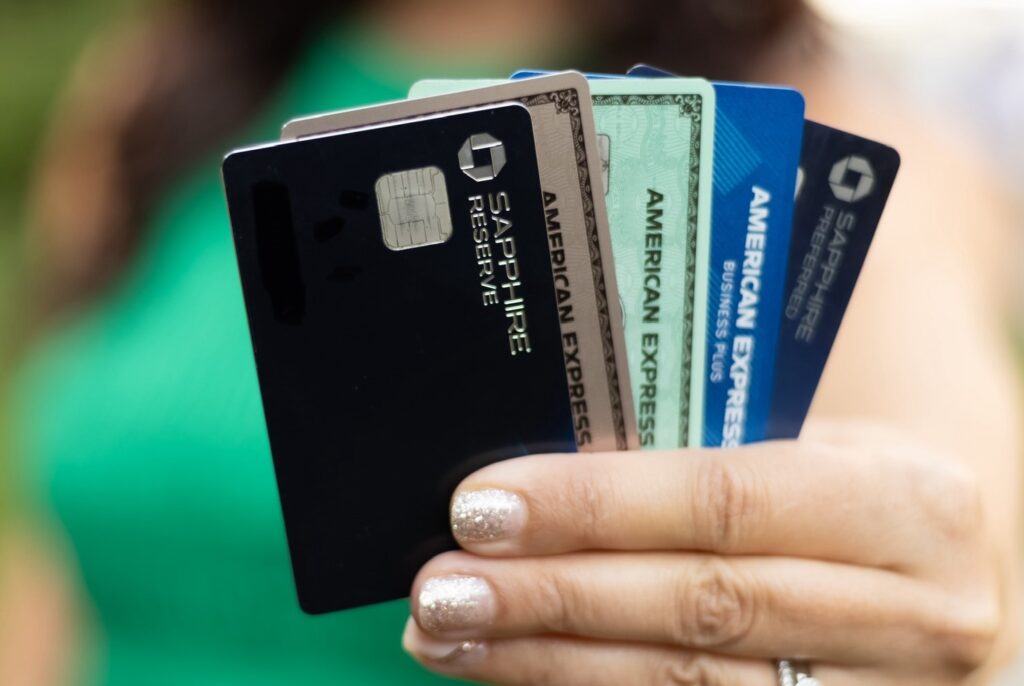
- Chase Sapphire Preferred® – Ideal beginner travel card with transferable points and flexible redemptions. Read my full guide to this card here.
- American Express® Gold Card – Excellent for dining and groceries (both high-earn categories).
- Capital One Venture Rewards Credit Card – A great all-around travel card for beginners and seasoned travelers alike. Read my full guide to this card here.
Pro tip: Don’t pick a card just for the sign-up bonus — choose one that fits your lifestyle and spending patterns.
The Bottom Line: Cashback Feels Good. Points Change the Way You Travel.
Cashback rewards are about saving money. Points and miles are about creating value — unlocking experiences you might never have justified paying cash for.
If your goal is to make travel more accessible, comfortable, and frequent, then points aren’t just better than cashback — they’re your ticket to seeing more of the world for less.
Frequently Asked Questions
Are points better than cashback for travel?
Yes — for travelers, points usually deliver 2–6x more value than cashback when redeemed for flights and hotels. Cashback gives a fixed return, while points can be leveraged for outsized travel experiences.
What is cents per point (CPP)?
CPP stands for cents per point — a way to measure how much value you’re getting from your points. Divide the cash price of your redemption by the number of points used, then multiply by 100.
Which credit cards offer the best travel rewards?
Cards that earn transferable points, like Chase Sapphire Preferred® or American Express® Gold, usually offer the best long-term flexibility and value.
When is cashback a better choice than points?
Cashback is better if you don’t travel often, carry a balance month to month, or prefer simple rewards with no strategy required.

Ready to start your points journey?
Check out my guide to earning points through everyday spending and learn how my family earned 1 million points in a single year — without changing our budget.
If you have any questions or need further advice feel free to email me or send me a message on Instagram. I’m always happy to share more tips and insights to help you.
Please note that this article contains affiliate links, and I may earn a referral commission if you choose to apply through my links. As a small business, these earnings help me to continue to bring you content like this at no extra cost to you. Thank you!
-
Advice | Family | Featured | How to | Rewards Travel
How to Maximize Points with Shopping Portals and Credit Card Bonuses
When it comes to maximizing your points and miles for travel, you might be overlooking one of the easiest ways to boost your balance: online shopping portals. These tools have helped us earn extra rewards for purchases our family is already making, and when used strategically, they can be a significant points earning strategy.
-
Southwest Companion Pass Guide: Your Ticket to Free Flights for Family Travel
The Southwest Companion Pass is a must-have for anyone who loves to travel with a friend or family member—especially if you’re looking to stretch your budget further. With this pass, a designated companion flies with you for free—you just cover their taxes and fees, which are typically only $5.60 each way on Southwest. As you can see, getting BOGO (buy one, get one) tickets on every flight for the duration of your companion pass can drastically reduce the cost of family vacations.