How to Plan Genealogy Trips: Free Step-by-Step Guide to Finding Your Roots
I will be honest with you: some of the most meaningful travel I have ever done had nothing to do with a famous landmark or a bucket-list city. It happened in tiny towns most people have never heard of, standing in the exact spot where my family started. That is the magic of genealogy trips. You are not just sightseeing. You are walking into your own story.
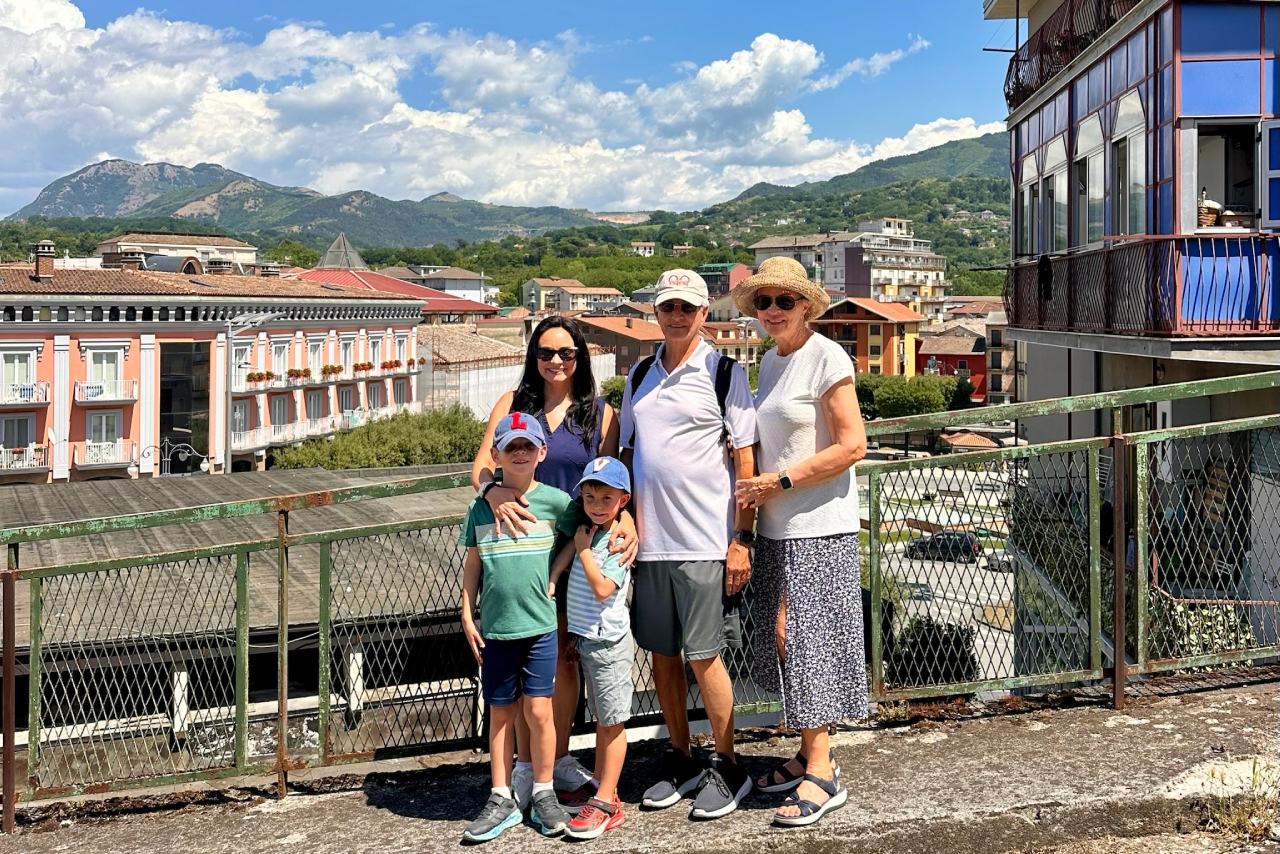
This is the second genealogy trip I have planned for my family. A few years ago we traced my mom’s side back to England and Scotland, and it was such a powerful experience that I knew we would do it again. This time, we traced my dad’s side of the family to Italy, specifically the Avellino area.
Here is the part I want you to hear, especially if you are an American whose family came from somewhere else a few generations back: you can research and plan a trip like this yourself. You do not need an expensive service or a professional genealogist to get started. A lot of the research is readily available, and most of the tools are free. You just need to know where to look! Let me walk you through exactly how we figured out where our family came from, and how we turned it into an actual trip.
What Genealogy Trips Actually Are (and Who They Are For)
You will see a few different names for this kind of travel. Some people call it heritage travel, some call it ancestry travel, and some call it roots travel. They all point to the same idea: visiting the places your family came from to understand where you come from.
There is a bit of a spectrum here. On one end, heritage travel can simply mean visiting the country or region your family is from, soaking up the culture and the food and the general feeling of the place. On the other end, genealogy trips can get quite specific. You are visiting the actual village, finding the church where your great-grandparents were married, maybe even standing in front of the house they lived in or meeting long-lost family members. How deep you go is completely up to you.
For us, it was important to see the actual small towns our family members lived in. They are not tourist destinations, bBut that is exactly the point. The value is not the place itself. It is the connection. So this guide is as much about how you can find your own places as it is about where we went.
How to Trace Your Roots Before You Go
Before you can plan, you need to know where you’re actually going. This is the research part, and it can be genuinely fun to discover your roots, but I also have to admit that sometimes it’s a little frustrating if you don’t have much information to start. It feels like detective work. Here’s how to uncover your family history without spending a dime.
Start with the Relatives You Already Have
Before you touch a website, talk to your oldest living relatives. Grandparents, great-aunts, the cousin who always seems to know everyone. Ask them for full names, maiden names, approximate dates, and any town names they remember, even if the spelling is fuzzy. Write it all down. This is the foundation everything else builds on, and these stories have a way of disappearing if nobody asks for them.
Use Free Online Tools to Find Your Ancestral Town
This is the step that surprises people. You do not need a paid subscription to make real progress. A few free resources do most of the heavy lifting:
FamilySearch
FamilySearch is run by a nonprofit organization. It’s completely free and holds billions of historical records from all over the world. This is usually where I start. You can build a family tree and search census, birth, marriage, and death records that often list the exact town your ancestors came from.
Ellis Island / Statue of Liberty Records
If your family immigrated to the U.S. between the late 1800s and early 1900s, the passenger arrival records are searchable for free. These manifests frequently list the town from where the person left, which is gold when you are trying to pin down a starting point.
Find A Grave
Find a Grave is a free, volunteer-built database of cemetery records. It is a great way to confirm names and dates, and sometimes to find relatives you did not know existed buried near each other.
Antenati
This website is specifically for Italian roots. It offers free access to digitized civil records from the Italian State Archives, including birth, marriage, and death certificates. If you already know your ancestor’s hometown, you may even be able to view scans of the original documents.
The goal of this step is to get from “somewhere in Italy” to the actual name of a town. Once you have that, everything gets easier.
How to Visit These Tiny Towns
So you have a town name. Now what? When the place is too small to have a tourism website or a single hotel, you have to get a little creative.
Find the Town’s Facebook Group
This is my favorite tip because it works almost every time. Search Facebook for the town’s name. Most small towns, even ones with a few hundred people, have a community group or a “you know you’re from here if…” page. Join it. These groups are full of locals and, very often, descendants of people who emigrated. You can post that your family came from there, share the surnames you are researching, and ask if anyone recognizes them. People are usually thrilled to help.
Reach Out to Local Churches and Town Offices
In a lot of these towns, the church holds records that never made it online. A polite email or message ahead of time, letting them know you are coming and sharing the names you are looking for, can open doors. The same goes for the town hall or local records office. Give them plenty of notice, and be patient. Many of these small towns don’t staff these local offices daily. It helps a lot to Google Translate your message before sending as well, since some of the staff in smaller towns will be older and not fluent in English.
Map the Actual Places You Want to See
Once you know where you are going, drop pins in Google Maps for every meaningful spot: the house, the church, the cemetery, the piazza. It helps you see how close together everything is, plan a realistic route, and make sure you are not driving two hours each way for a five-minute stop. Consider also that some of these towns will not have a hotel or a restaurant, so you’ll need to have a plan for where to eat and stay in relatively proximity.
What We Actually Found in Our Three Towns
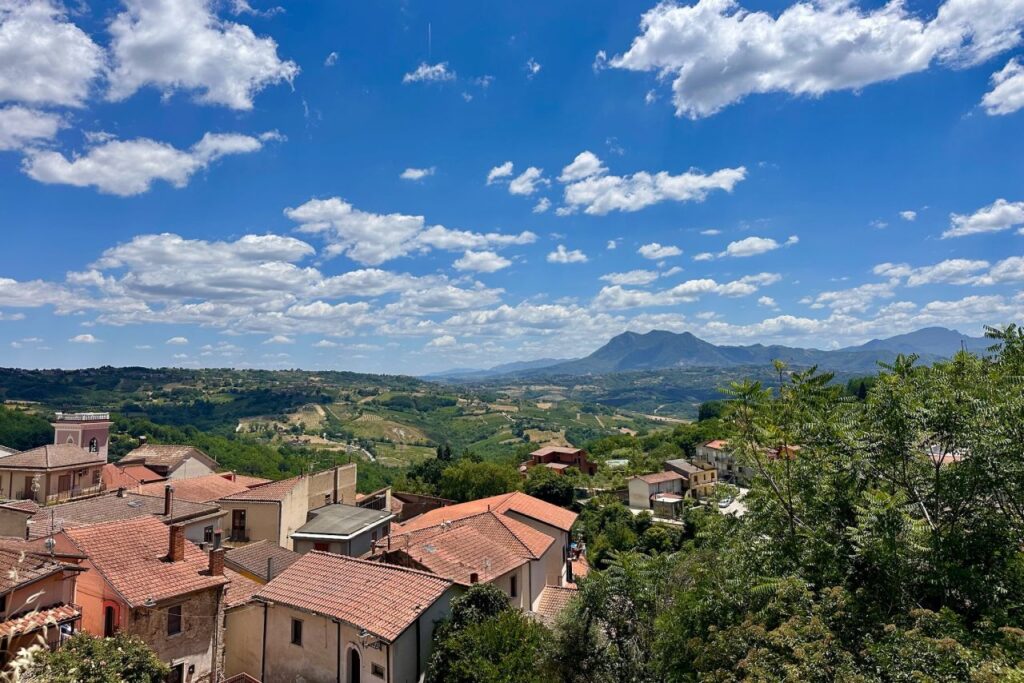
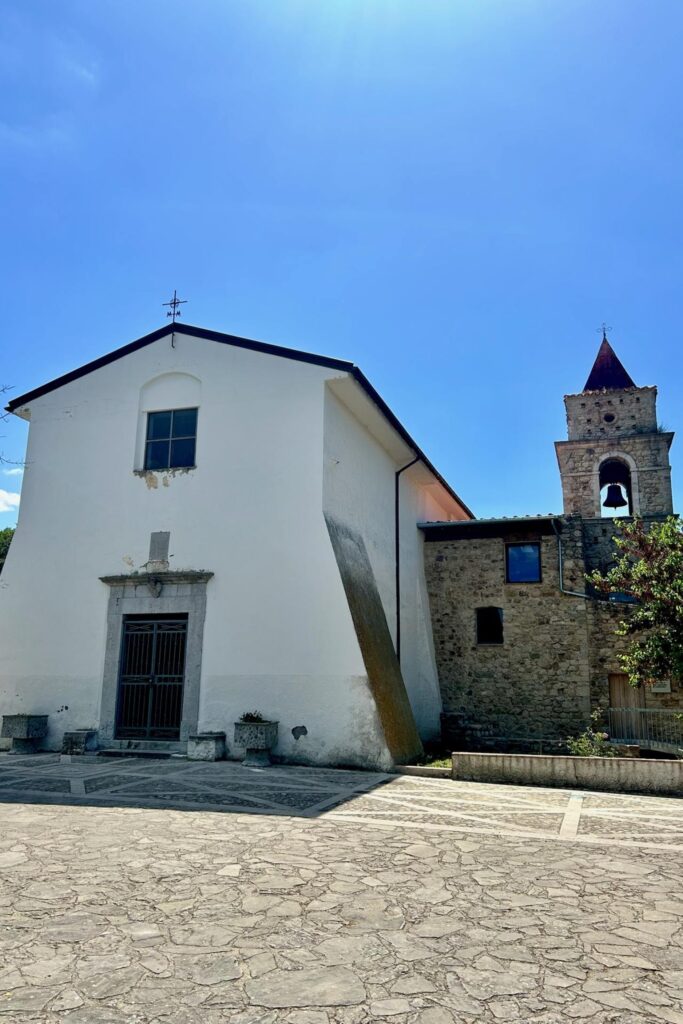
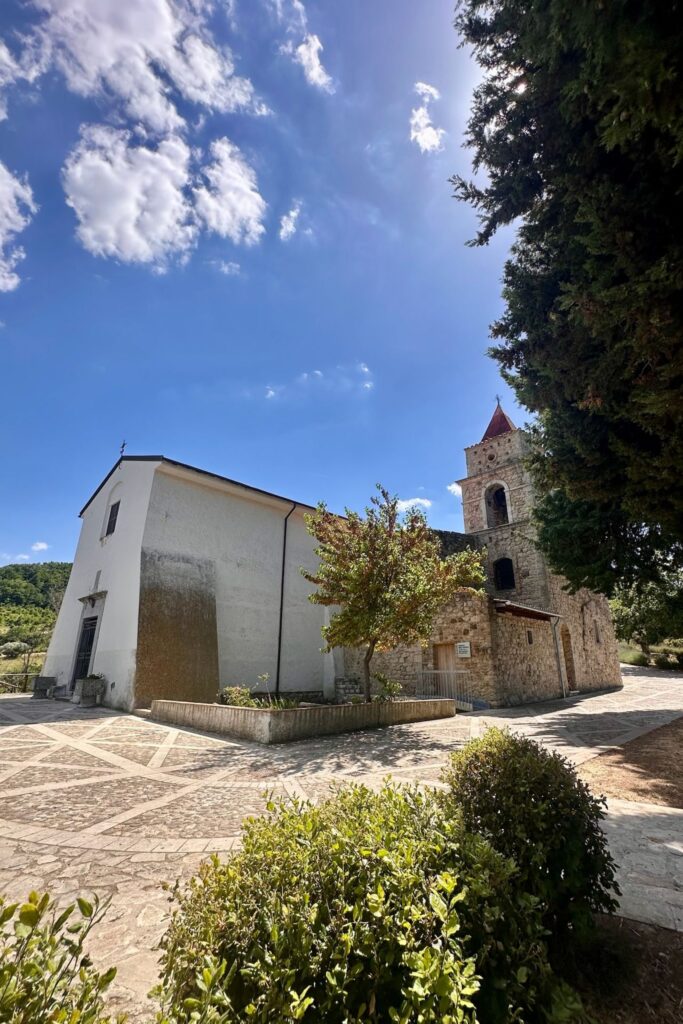
For our genealogy trip, the research led us to three small towns in the Avellino area: Atripalda, Aquilonia, and Santa Paolina. I want to be honest about what each one was like, because it shows you that not every stop delivers the same thing, and that is completely okay.
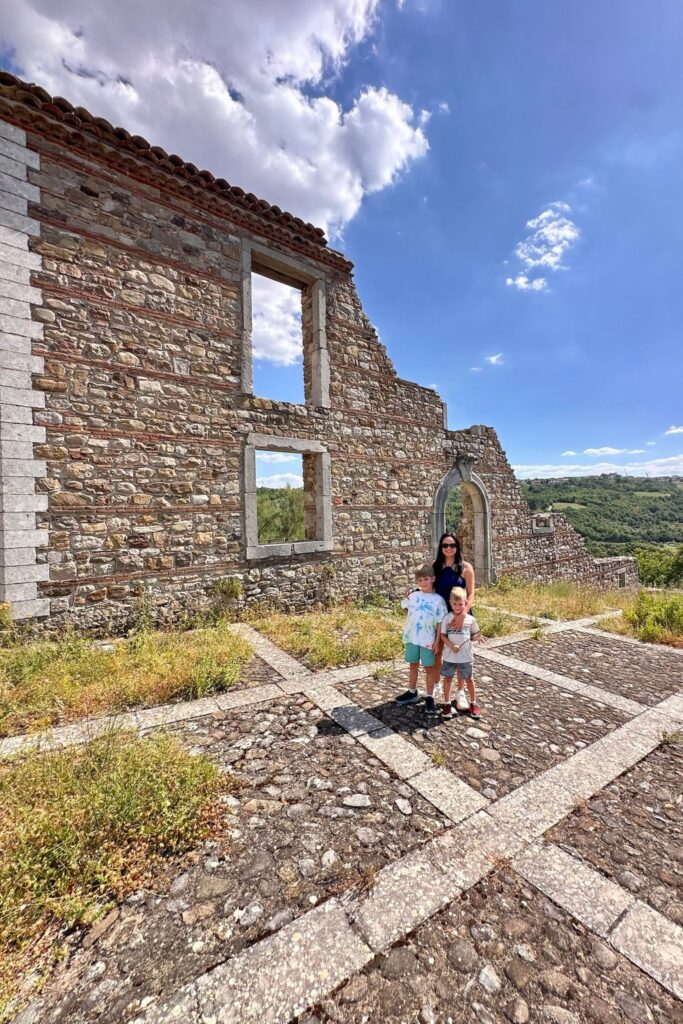
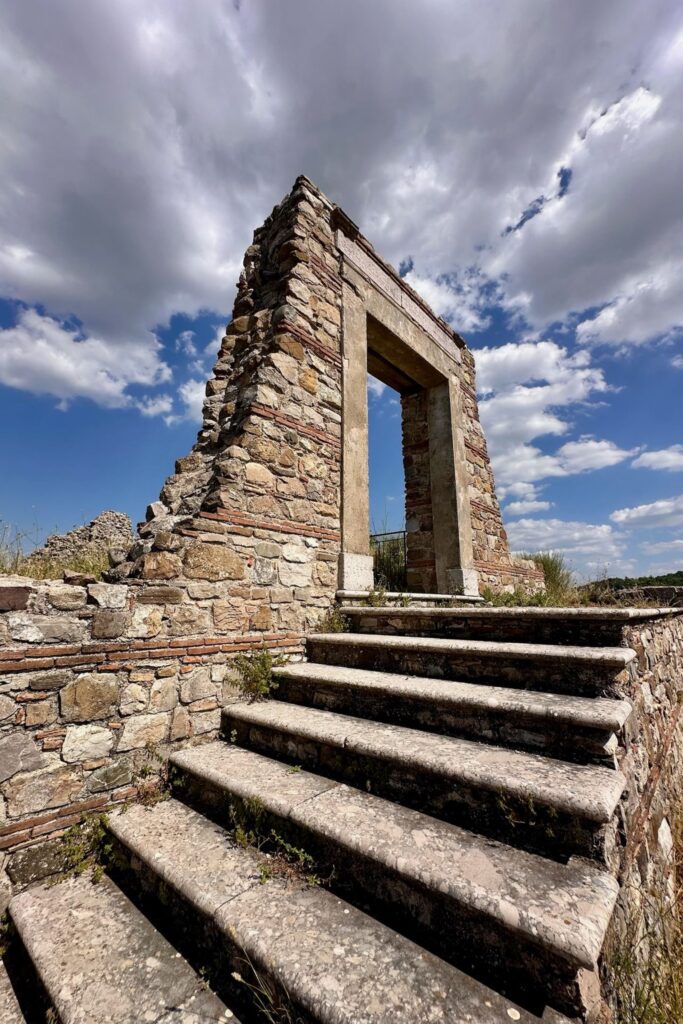
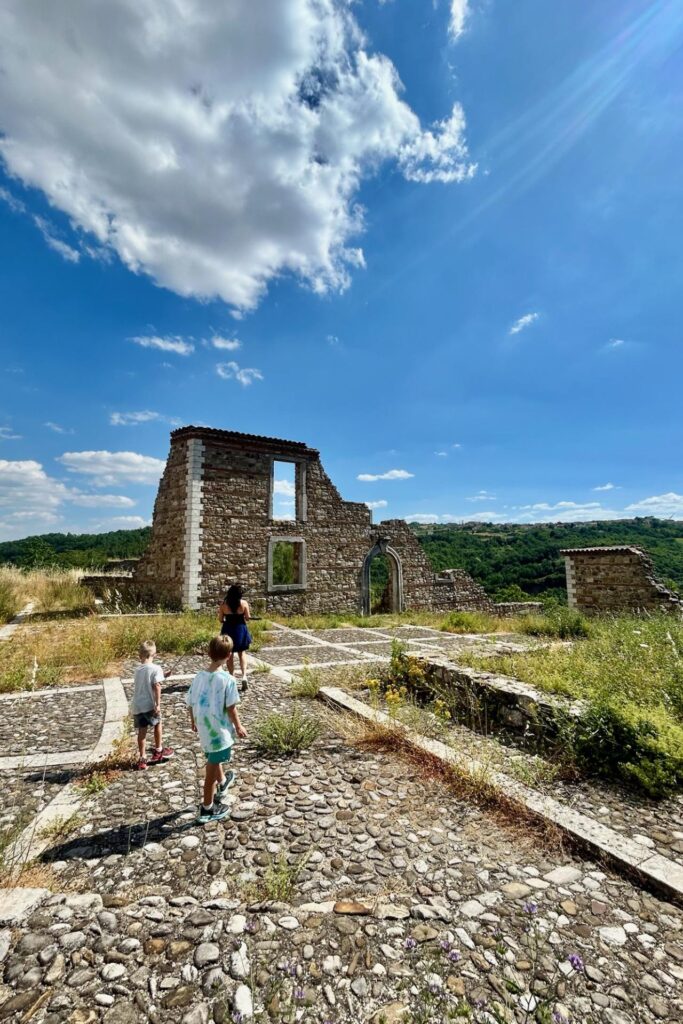
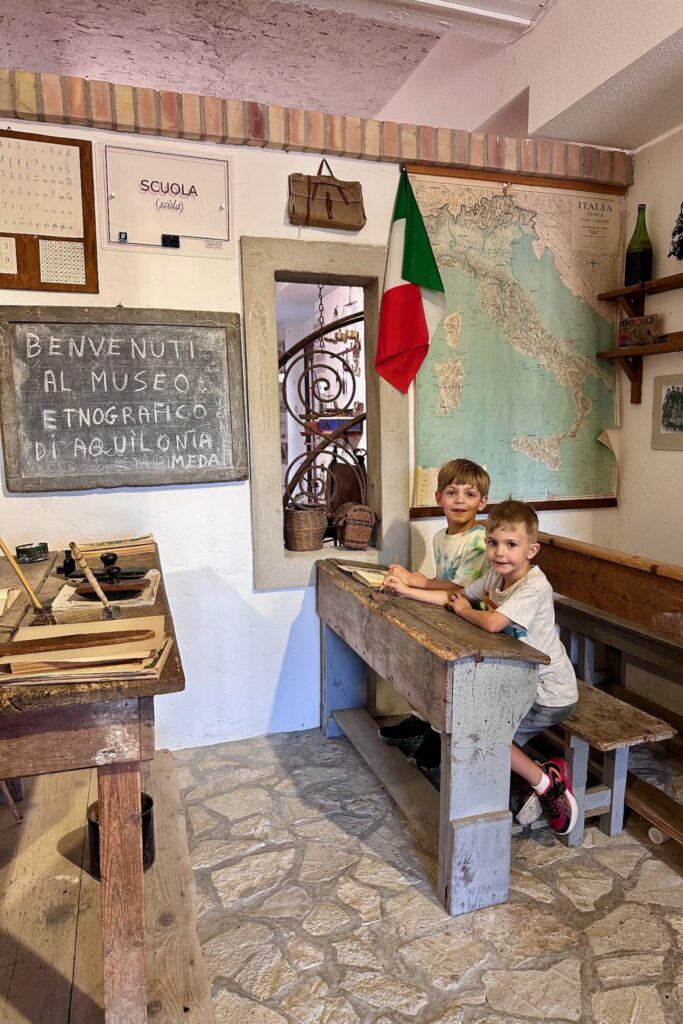
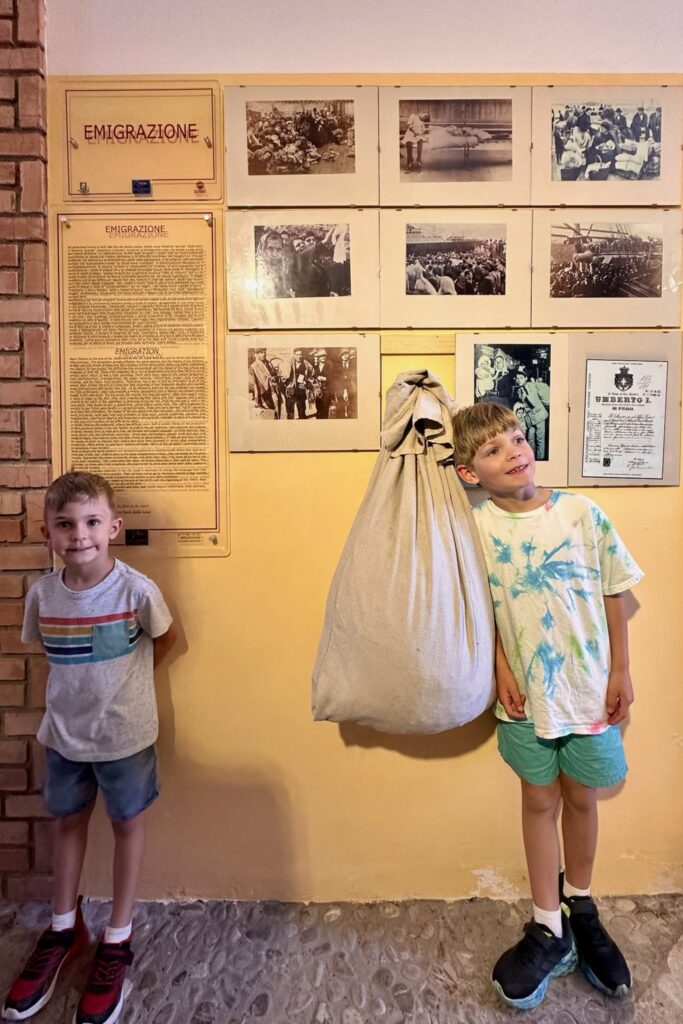
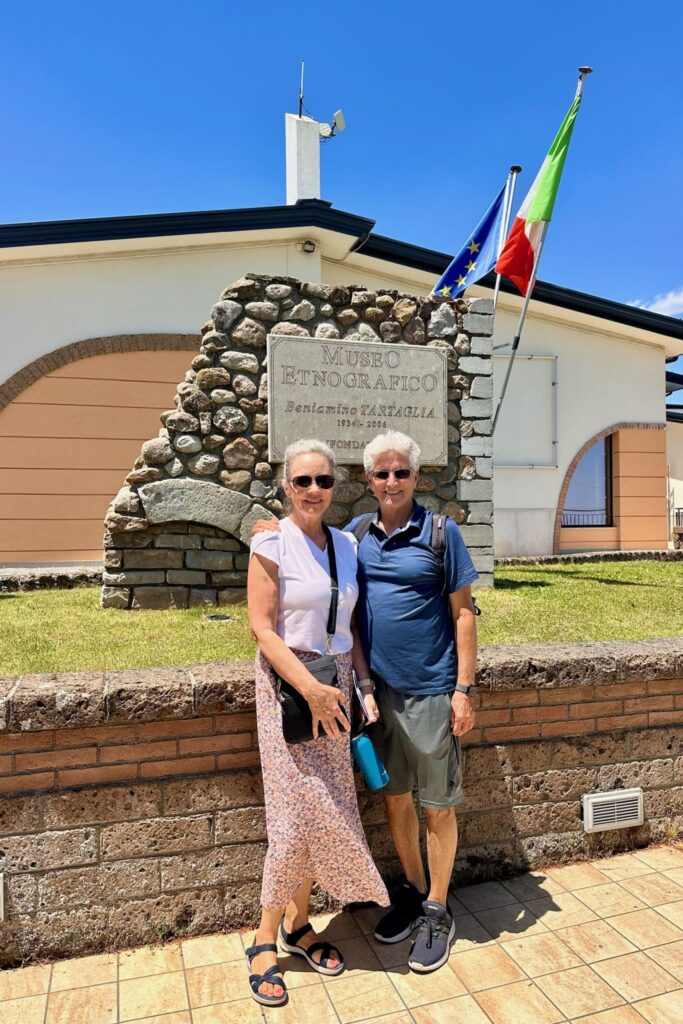
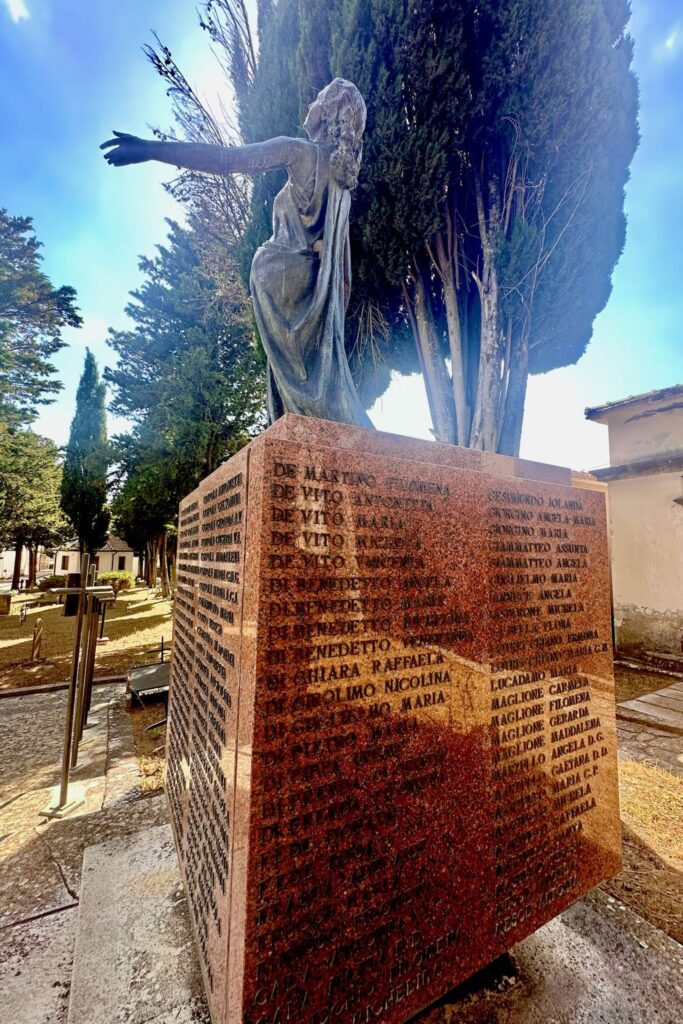
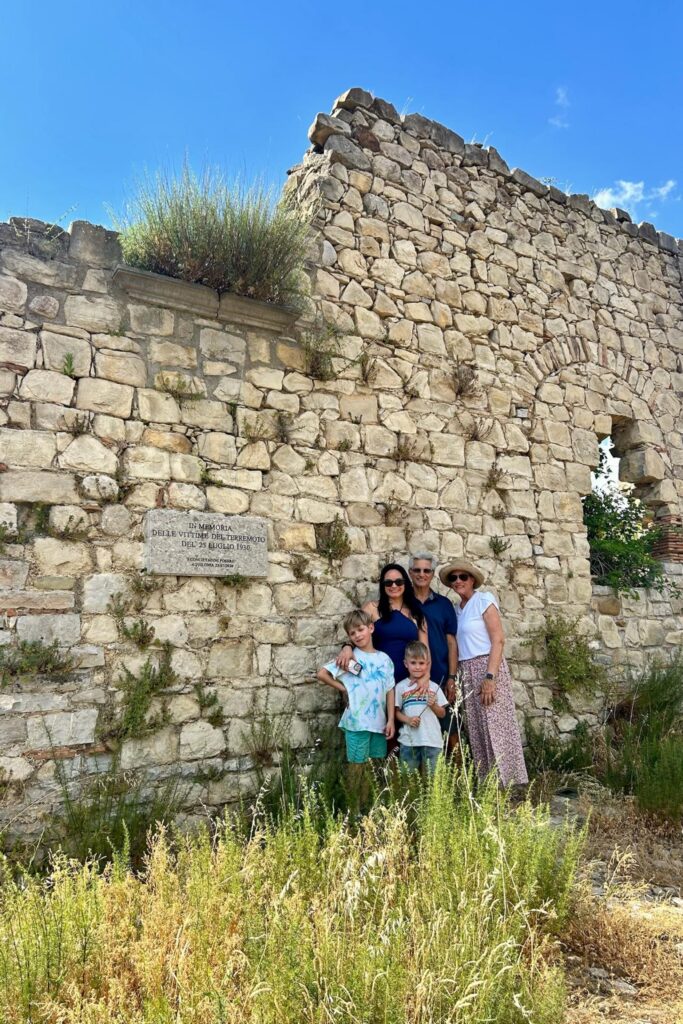
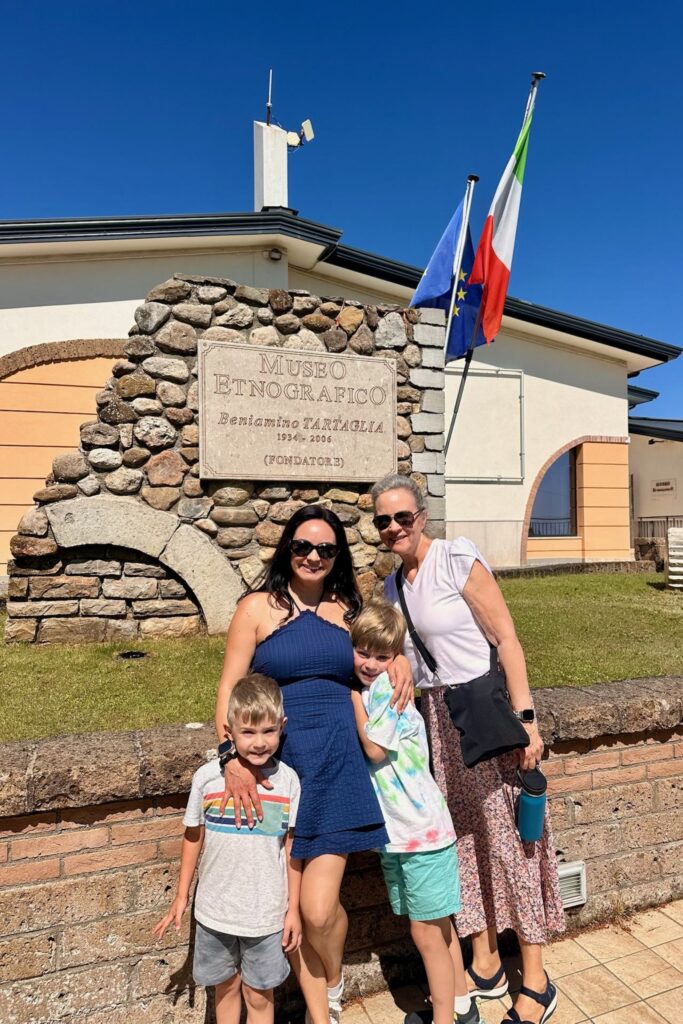
Aquilonia was the one with the most to see in terms of our family history. The town has a tragic past. A devastating earthquake destroyed it in 1930, and there is now a museum and the ruins of the old town you can walk through. For me, this stop was deeply personal. My great-great-grandmother died in that earthquake, and her name is on the memorial in the cemetery. My dad, who had heard stories about his grandfather’s mother from him found the memorial quite moving.
This tragedy is actually the main reason we were able to find such a rich history on our family in this town. Because of the earthquake, the museum was created, and along with it came curators and historians, who recorded our family’s history. I was able to connect with them via the town’s Facebook page and get an English speaking tour scheduled. Due to this town’s tiny size, we weren’t able to stay nearby, and our tour guide had to arrange for the only restaurant in town to open especially for us for lunch.
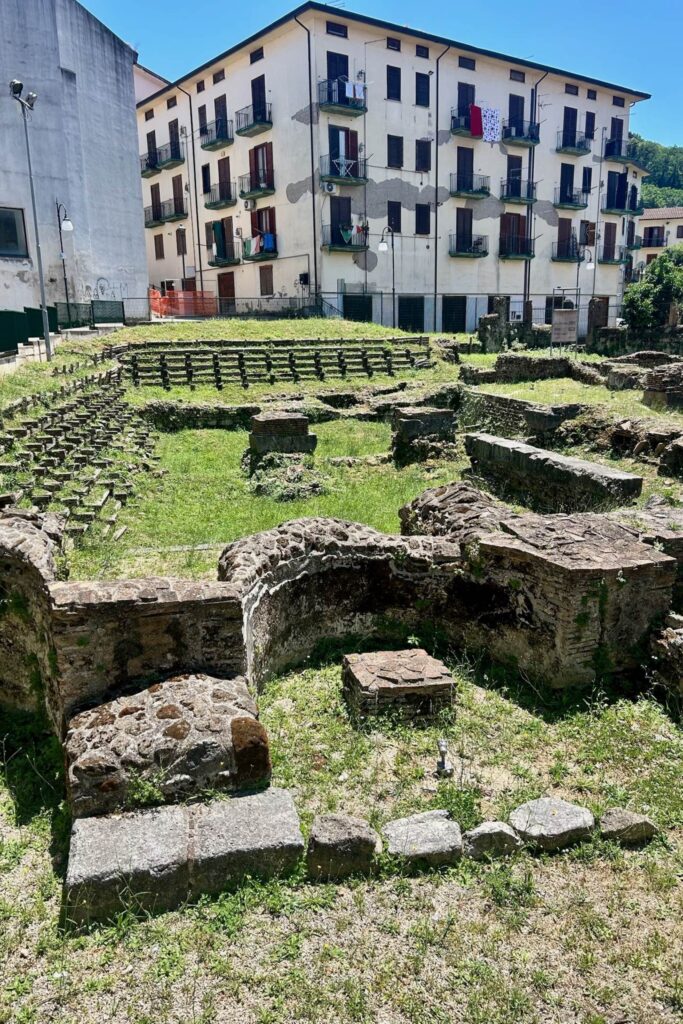
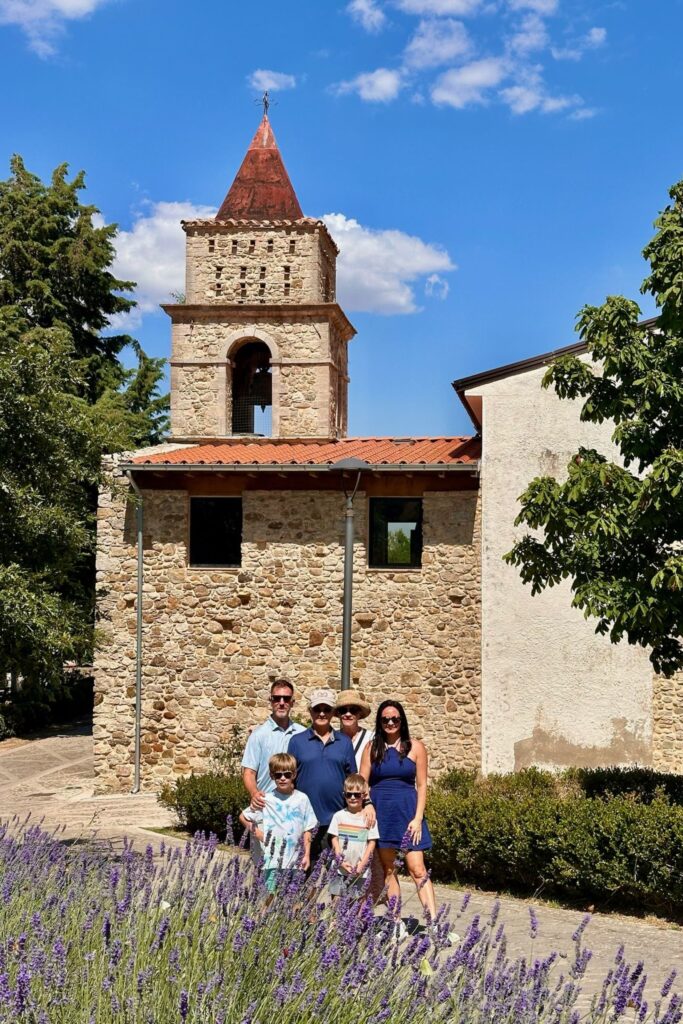
Atripalda and Santa Paolina were different. We knew our family came from these towns through our research, but there was not a specific house or grave waiting for us. What we did instead was visit the things that were there when our ancestors were, the Roman ruins, the old churches, the streets they would have walked. And felt special enough. You do not always need a big discovery. Sometimes just standing where they stood, seeing what they saw, is the whole point.
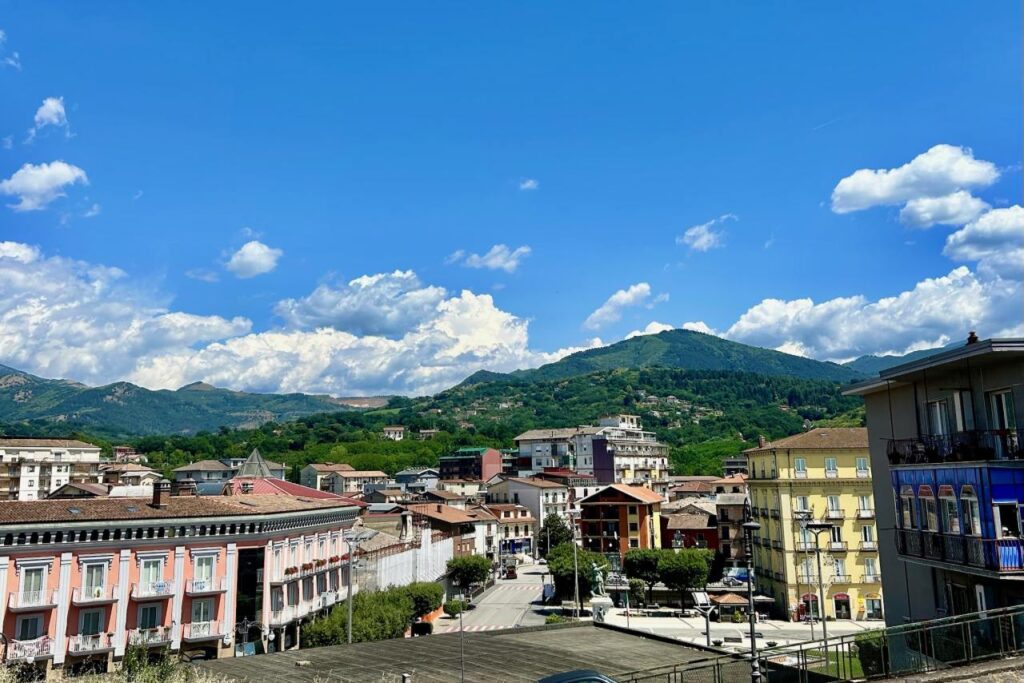
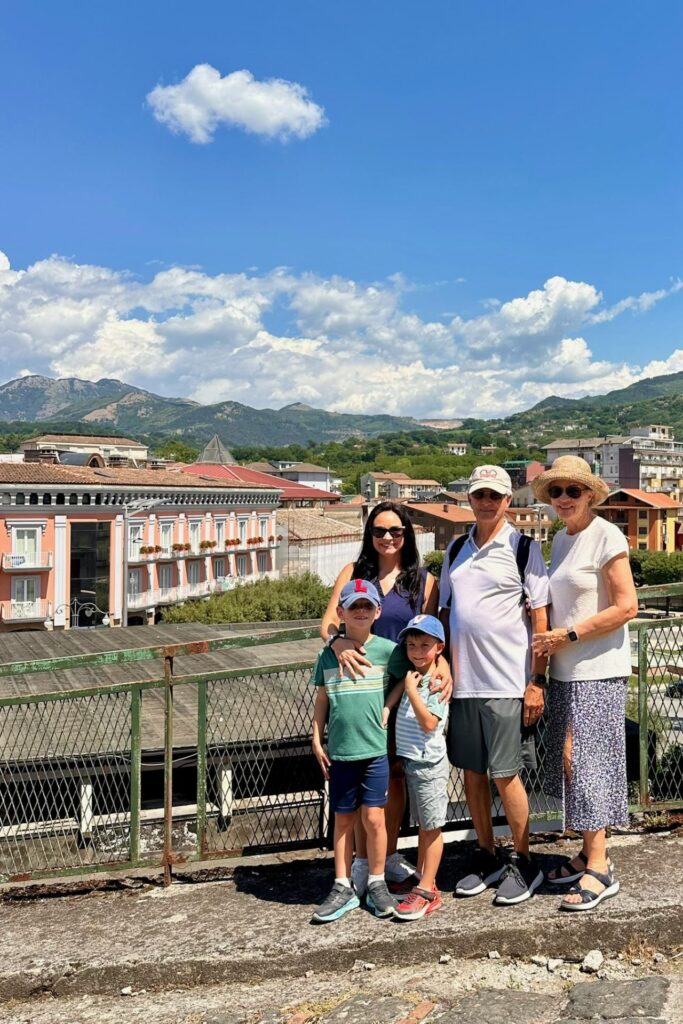
Being that Atripalda is a bit of a larger city (Atripalda: ~ 10,172 residents; Aquilonia: ~ 1,485 residents; Santa Paolina: ~ 1,122 residents), there was much more to do there in terms of “being a tourist”, including restaurants, well-preserved town history, and even a gelateria. In Santa Paolina, the highlight was speaking to some of the current residents, who were delighted to see travelers visiting their town. In Italian, an older gentleman told us he hadn’t seen tourists in the town in “many moons”, while inquiring the reason for our visit. He was delighted we were there, and invited us to dinner at his home.
Turning the Research Into a Real Trip
Here is something I learned the first time around, on my mom’s England and Scotland trip: a roots trip works best when it is not only about the research. These tiny towns are often near places you would genuinely want to visit anyway, so build the trip around both.
For our family, the genealogy portion is paired with a bigger Italy trip, and we have spent plenty of time in the must-see spots too. If you are bringing kids along and want a sense of how we balance the meaningful family moments with the typical vacation spots, my guide to the best things to do in Rome with kids is a good example.
A few things that make genealogy trips smoother:
- Give yourself buffer time. Small-town visits never go exactly to plan, and the best moments are usually the unplanned ones. Leave time to wander, explore, and chat with locals if you can.
- Bring copies of old family photos and a simple family tree printout. Showing a photo to a local is a kind of magic. Names and dates translate across any language.
- Document everything while you are there. Take pictures of records, gravestones, and street signs. Keep a few notes each night so the details do not blur together.
- Be flexible about language, and try to learn at least some basic things. Google Translate is a great tool.
- Try to arrive in the morning or late afternoon. Many small towns close for a few hours after lunch during the midday break, so you don’t want to arrive when everything is closed.
What About the Cost?
If you are wondering how a family pulls off an international trip like this without going broke, you are asking the right question. There were eleven of us on this one, and for my parents and my sister’s family, it was their very first time using points and miles to travel. The short version: we covered a huge chunk of it with rewards travel, and it is absolutely something you can learn to do, too. I teach families how to use points and miles to travel for pennies on the dollar in my MAD Miles Masterclass course. Join me here.

Final Thoughts
Of all the trips I have planned, genealogy trips are the ones that stay with me the longest. There is something about standing where your family stood, in a town you had never heard of until you went looking, that reshapes how you see yourself. And the best part is that the planning is within reach for anyone willing to do a little digging. Talk to your relatives, lean on the free tools, find that Facebook group, and go.
If you have been curious about how to trace your roots and turn it into a trip, consider this your sign. Your family’s town is out there waiting, and finding it is more than half the adventure. As always, if you have any questions or want more tips, send me a message on Instagram. I’m always happy to help make your family’s trip unforgettable.
-
Northern Portugal With Kids: Porto, the Douro Valley & Gerês: Your Perfect Family Weekend
I’ve said it so many times, but it’s worth saying again: Portugal is the most underrated country for families in Europe. And while most families who do visit are busy planning their Lisbon itinerary or counting down the days to the Algarve beaches, northern Portugal is sitting up there quietly being spectacular. We’re talking cobblestoned riverfront cities, wild national parks where horses roam free, terraced vineyards dropping straight into a UNESCO-listed river valley, and some of the warmest hospitality in all of Europe. Oh, and the food? Amazing!
If you’re planning a family trip to Portugal, you need to consider heading north, with this itinerary as your guide. Three days, three very different experiences: Porto with kids, the Douro Valley with kids, and Peneda-Gerês National Park, all designed for families. Let’s go.
Already planning a bigger Portugal adventure? Don’t miss my guides to Sintra, Belém, and Lagos or explore all my Portugal posts.
-
Best Moments | England | Europe | Family | Featured
Things to Do in Richmond London: An Unforgettable Ted Lasso Day Trip With Kids
If you have watched even one episode of Ted Lasso, you already know Richmond. The corner pub. The green with the soccer goals. That little row of shops that looks like somebody painted it for a postcard.
Maybe you didn’t realize that Richmond is real part of London, twenty minutes from central London by train, and there is so much more to it than the filming locations. We visited Richmond during a trip to London and Copenhagen, it ended up being one of my favorite days of the whole trip. We even had the “should we move here” moment, just like Ted Lasso.
Now that Ted Lasso is back, everyone is asking about Richmond again. So I’ve gathered all the best things to do in Richmond London, from the show’s filming spots to the deer in Richmond Park, plus every way to get there.