Best Things to Do in Rome with Kids
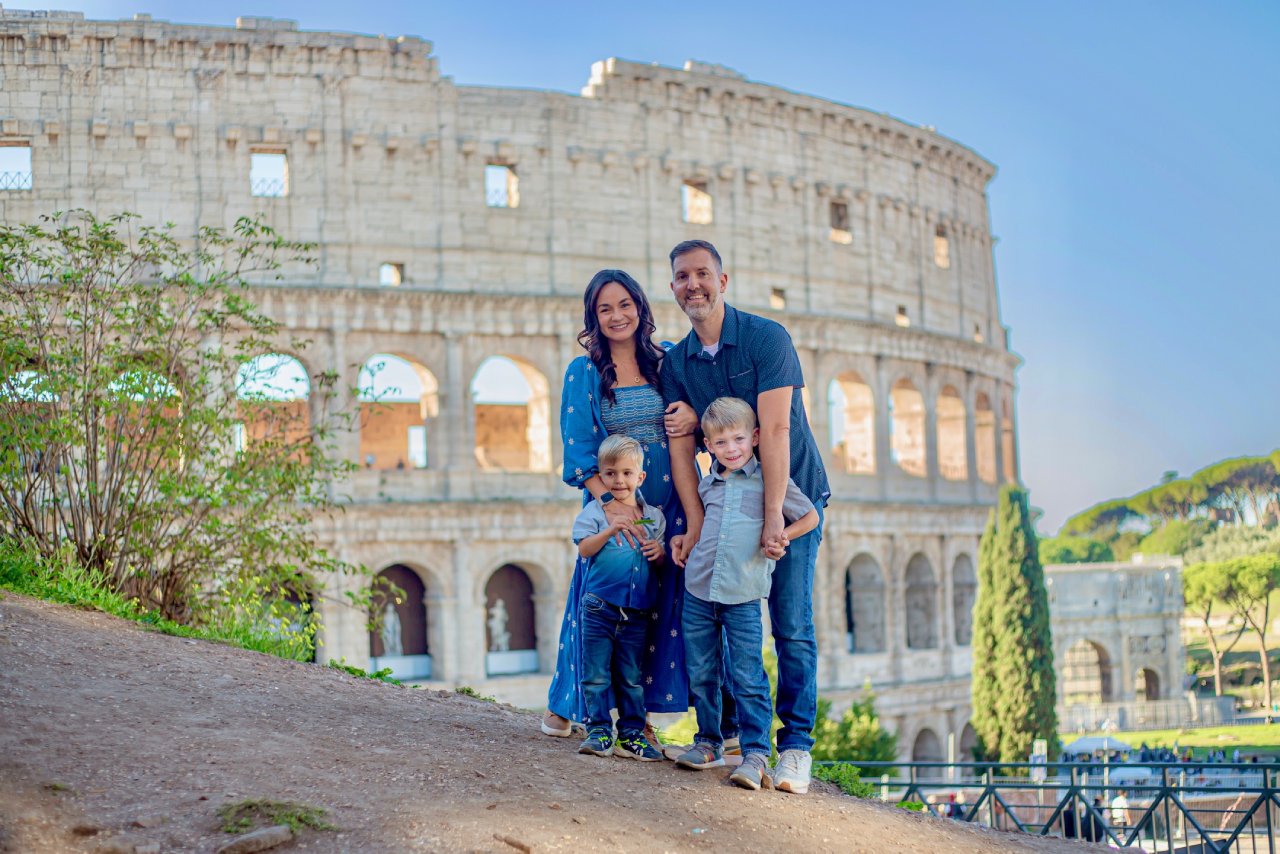
I’ll be the first to admit it: if I’m planning a trip, there is a 90% chance I’m trying to figure out how to get back to Italy. And Rome is the quintessential Italy experience that every family needs to have at least one (and maybe more than once!) It is the kind of city that just feeds your soul: the history, beautiful, and food are all ideal for core memory making.
Taking the kids to an ancient, big, bustling city can feel like a massive undertaking, but that is exactly what this guide is designed for! From dodging the tourist traps to finding the best spots for kids among the ruins, I’ve done the heavy lifting for you. I’m sharing all my best tips and favorite stops so you can skip the stress and get straight to the magic. Andiamo!
Before You Go: A Few Things to Know About Rome
Book Everything in Advance
I cannot stress this enough: The Colosseum, the Vatican, and most major sites run on timed entry tickets. Lines without a reservation can stretch for hours, and that is not a situation you want to be in with a kid in the summer heat. If you are planning to visit Rome with kids, book any must-do popular tourist attractions ideally 60 days ahead of your visit.
The Cobblestones Are Real
Rome’s historic center is almost entirely paved with uneven cobblestones, and they will test your feet and stroller situation fast. Ladies, I know the Italians are super fashionable, but this isn’t the place to wear your best heels. Everyone in your party needs a flat walking shoe to avoid turning an ankle.
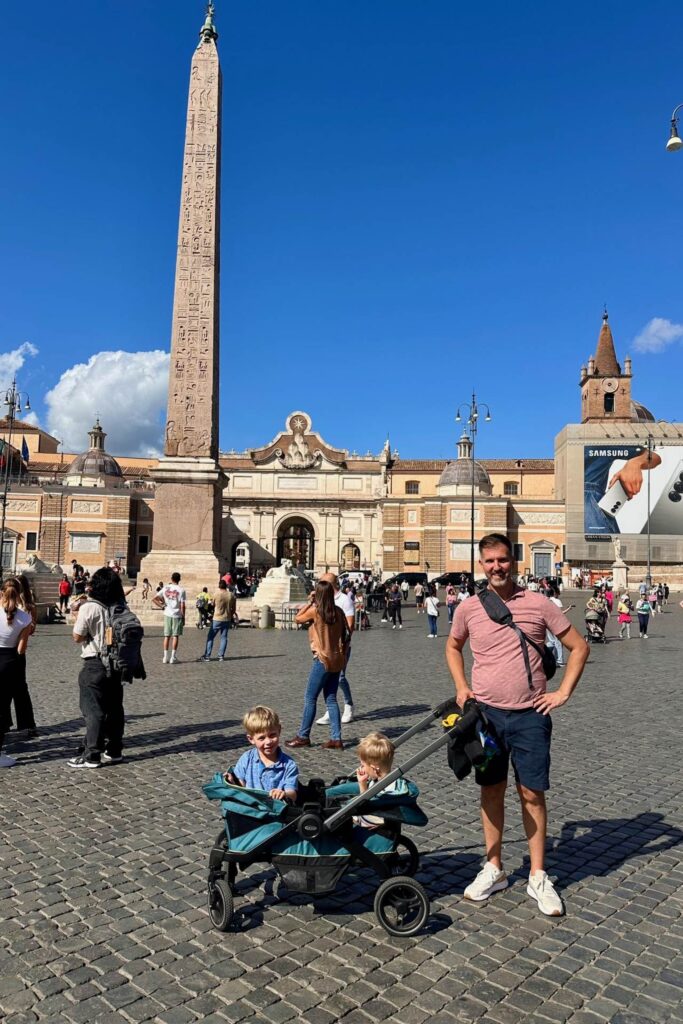
As for wheels for the kids, we use the Graco Modes Aventura for all of our Europe trips, and it is a lifesaver: wide enough wheels to handle the cobblestones without a fight, and both kids could ride when little legs gave out. Plus, it’s not wide, so you can get down even the tightest sidewalks. A carrier is also worth packing for the spots where strollers simply can’t go, like St. Peter’s Basilica or any underground tour.

Best Time to Visit Rome with Kids
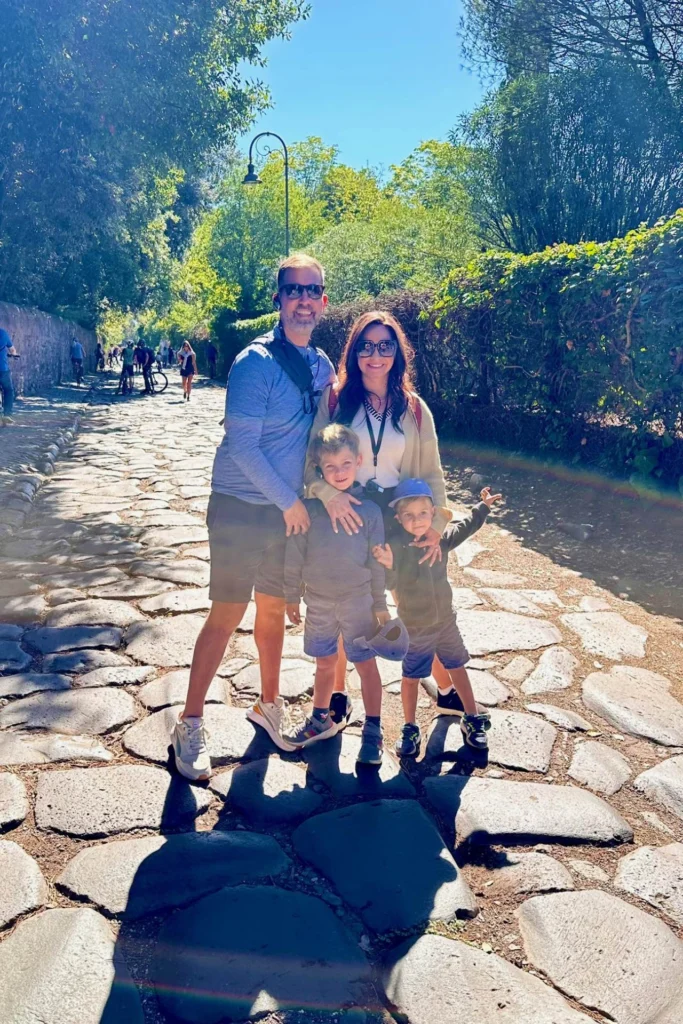
- Autumn (September through October): My absolute top choice for families; I just love Italy in the fall! Temperatures drop to a very pleasant range, the summer crowds thin out, and the city has a beautiful golden quality in the light. September especially feels like Rome at its most livable.
- Winter (November through February): The least busy time of year, which has real appeal if your kids are in school and you’re traveling over holiday breaks. Christmas in Rome is magical, with markets and lights throughout the historic center. January and February are cold and quiet, which some families love.
- Spring (March through May): The weather is mild, flowers are everywhere, and the crowds are manageable compared to summer. Long days out are comfortable, and your kids won’t be melting on the walk between gelato stops.
- Summer (June through August): Doable, but genuinely brutal heat-wise, especially July and August. If this is your only window, plan for very early mornings, a long midday break at your hotel, and lighter afternoon outings. Hydration and shade become your whole strategy.
- Important Note about August & December: These are prime holiday months for the entire country of Italy, and many shops, restaurants, and attractions will close completely during these months. If you must travel then, check that what you want to do is available before booking.
Where to Stay
Your neighborhood choice will shape your whole trip. Staying close to the historic center means you can walk back to your hotel for nap time without losing half the day to a taxi.
- The Pantheon and Piazza Navona area is a great base: central, charming, and with enough cafés nearby that you will never be far from a snack.
- The Trastevere neighborhood is another solid pick for families, with a relaxed village-like feel, beautiful streets, and good restaurants with outdoor seating.
- If you want to be close to the Vatican, the Prati neighborhood is quieter and very walkable.
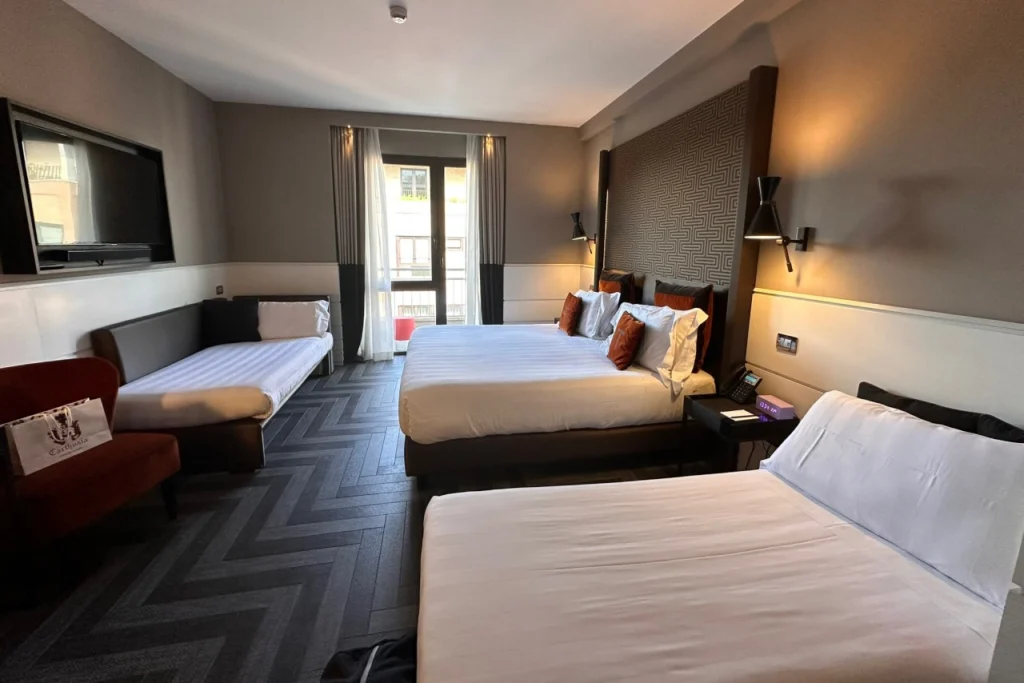
- One our last trip, we stayed at The Tribune using Hyatt points. We were thrilled with our stay there and highly recommend it.

The Best Things to Do in Rome with Kids
The Colosseum and Roman Forum
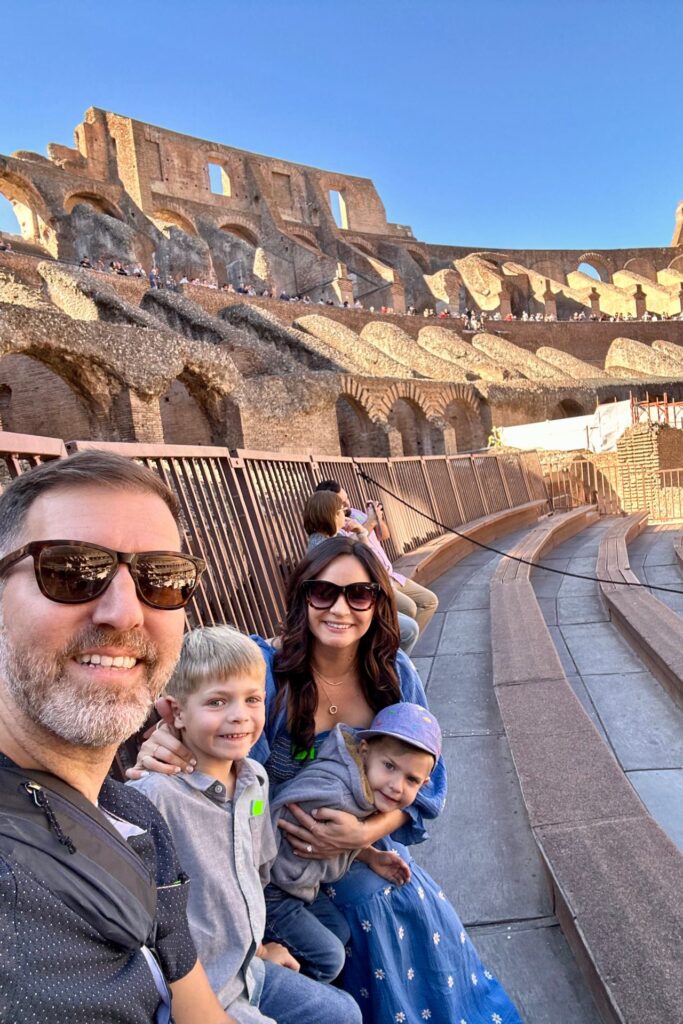
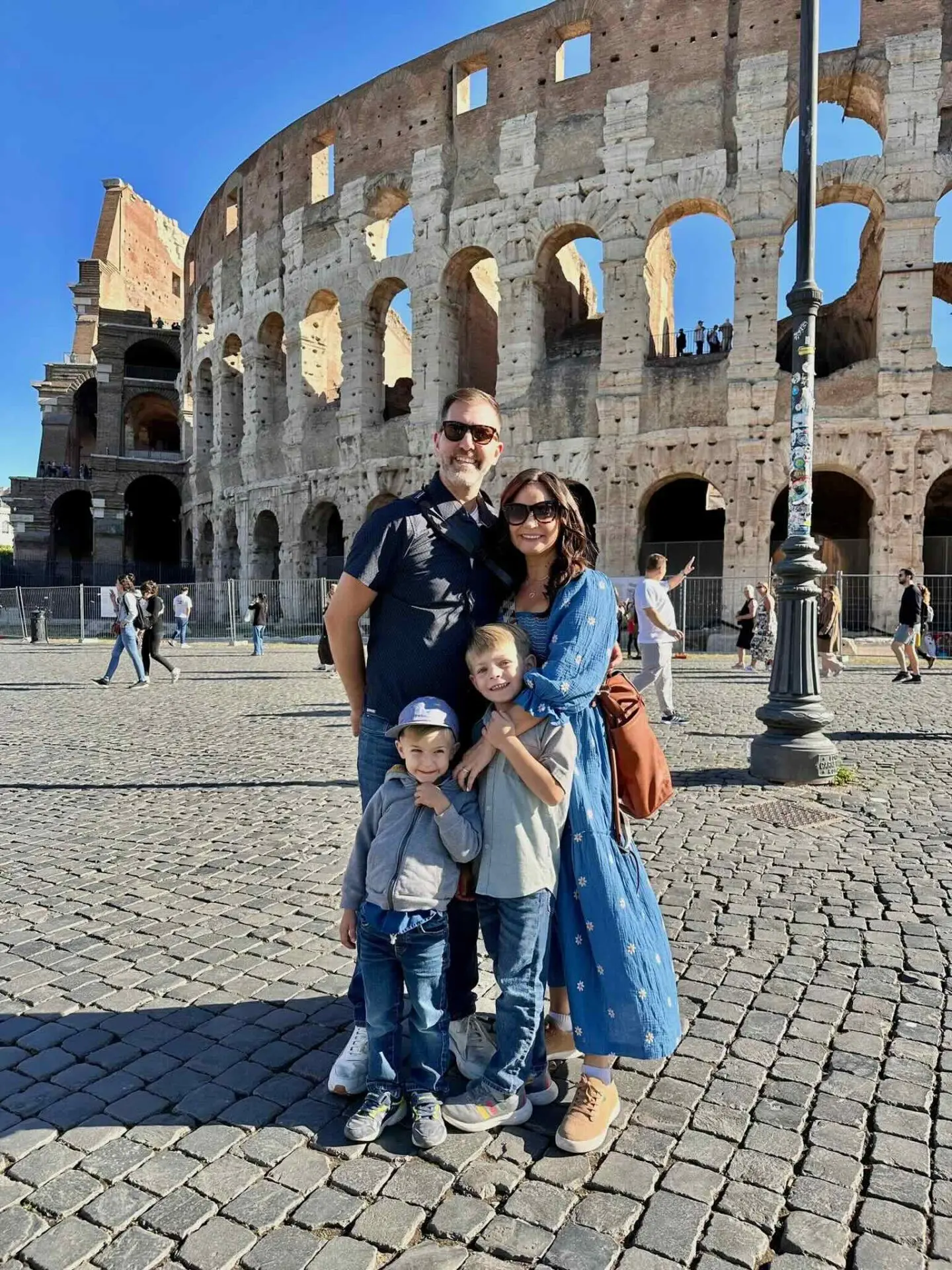
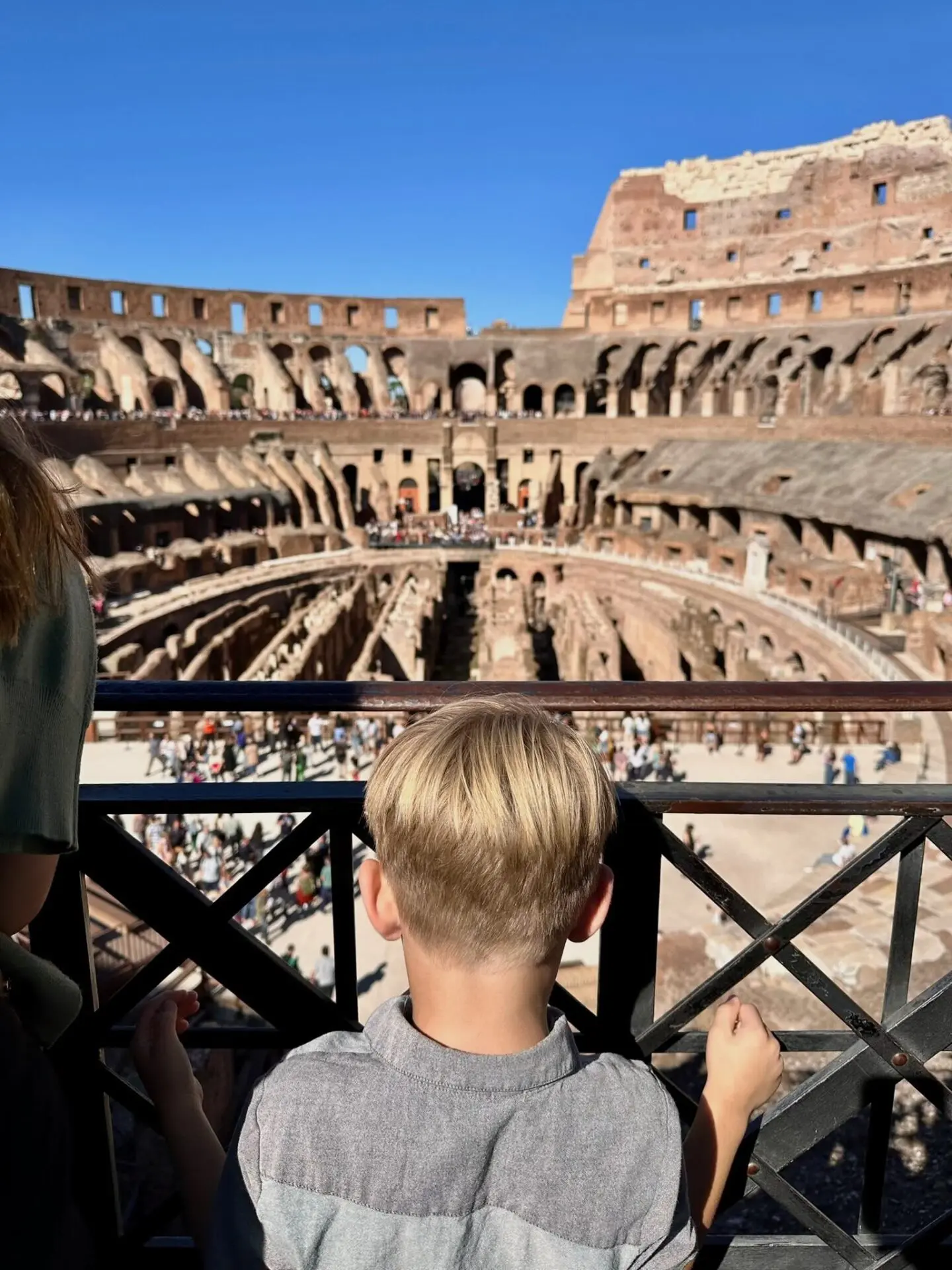
This is the big one, and young kids will definitely be amazed. My kids had no real frame of reference for ancient Rome before we arrived, but standing inside the Colosseum gave them something to grab onto. Gladiators. Giant arenas. Stories. It clicked in a way that a museum probably would not have.
Practical Tips for Visiting the Colosseum with Kids
Book skip-the-line tickets in advance or go one better and book a family-friendly guided tour that includes skip-the-line access. Tours designed for kids often use a scavenger hunt format, which is genuinely the difference between a 20-minute attention span and a kid who is engaged for the full visit. The Colosseum has elevators for families with strollers, so you can get to the upper level without navigating stairs. The underground and arena floor access require a carrier rather than a stroller, so keep that in mind when choosing your ticket type.
The Roman Forum is right next door and included in most Colosseum tickets. My honest advice: if your kids are on the younger end of the 3 to 6 range, do the Colosseum and save the Forum for when they are a little older. It is a large, largely open-air site with a lot of “look at these ruins” energy, which is harder to make exciting for a little kid.
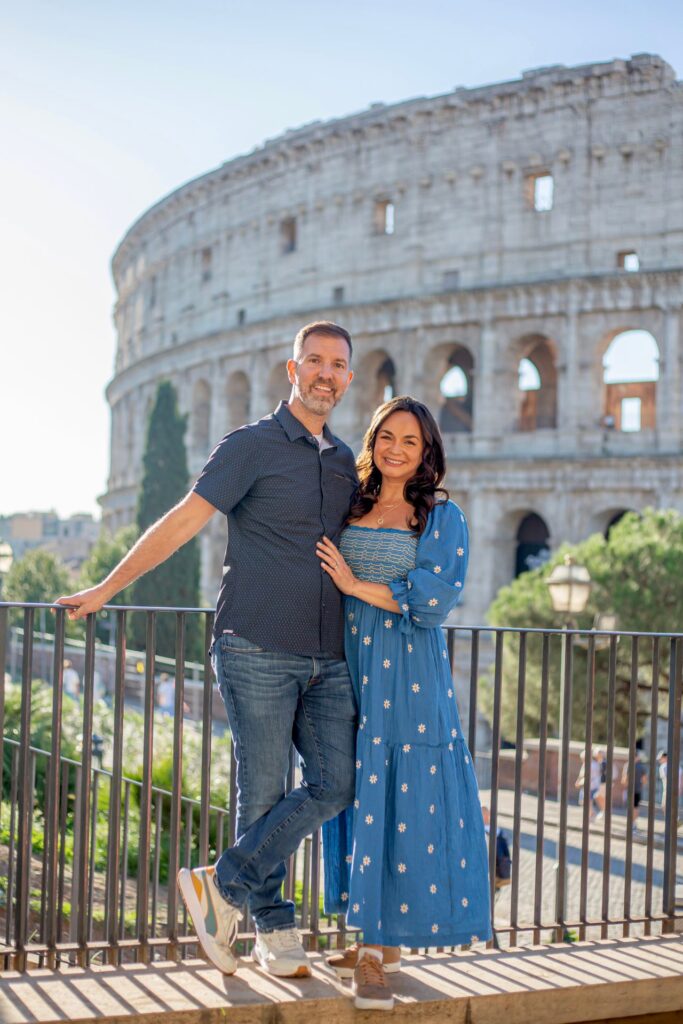
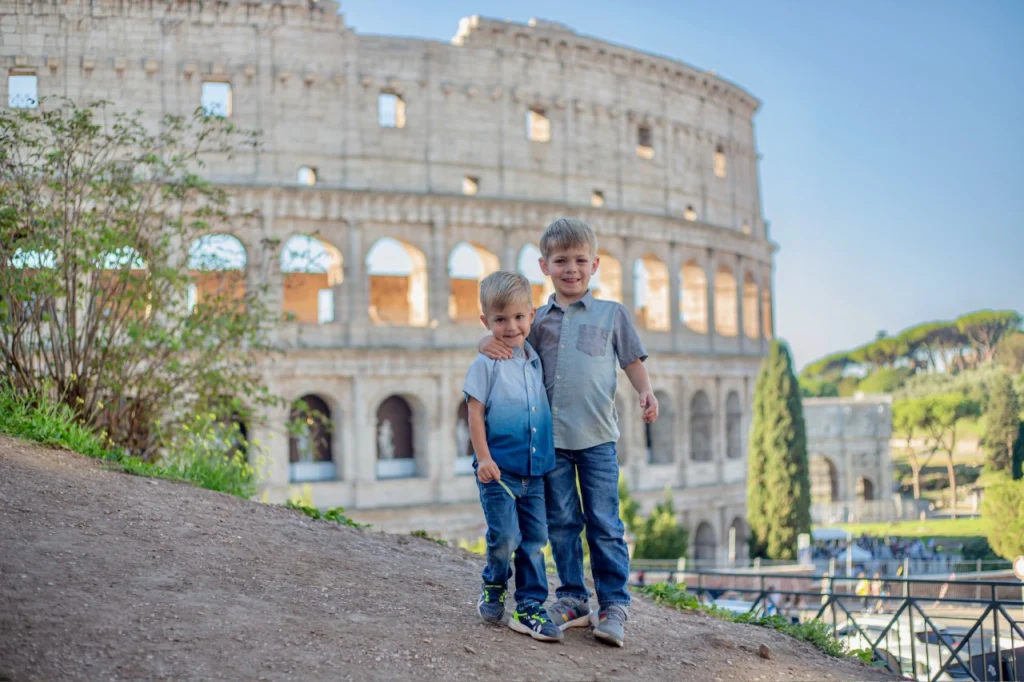
PRO TIP: I always book a professional photo session on our family trips, and Rome was no exception. We had ours at the Colosseum and the photos are honestly some of my favorite we have ever taken as a family. It’s non-negotiable for me whenever we travel. This is the photo shoot that we did. Highly recommend adding it to your Rome with kids plans.
The Trevi Fountain
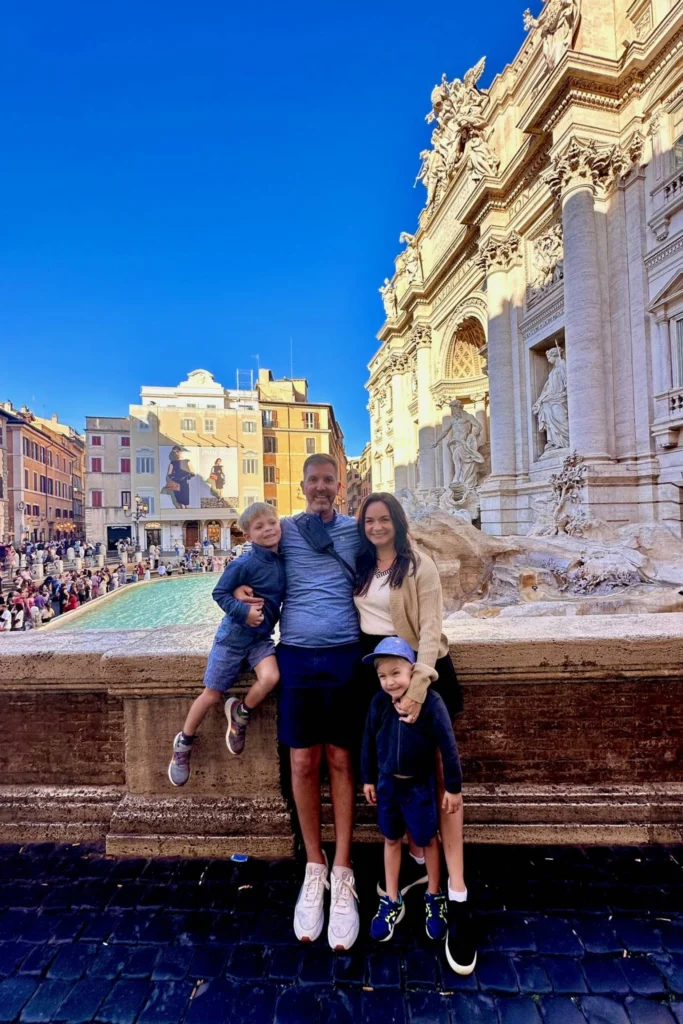
No list of things to do in Rome with kids is complete without this one, and for good reason. The Trevi Fountain is genuinely spectacular, and the coin-throwing tradition is an instant win with little kids. Give each child their own coin, explain the tradition (one coin means you’ll return to Rome, two means you’ll fall in love, three means you’ll get married), and let them do their own wish.
What to Know About the New Ticketing System
Rome introduced a paid entry system at the Trevi Fountain starting February 2026. Non-residents now need to buy a 2-euro ticket to approach the fountain and toss their coins. That’s just over two dollars per person, so for a family it’s a small but real line item to factor in.
Tickets can be purchased online on the official website, at the Civic Museums, at Tourist Infopoints, at affiliated sales points, or at the entrance by card only. The ticketed hours run every day from 9am to 10pm. Children under five get in free, and there are no time limits once you’re down at the basin level, which is great news with kids because you’re not being rushed through the moment.
The good news is that the crowd management system has made the basin area noticeably less chaotic, which honestly makes the experience better for families. The coin-throwing moment lands differently when you’re not elbow-to-elbow with 400 strangers. Keep in mind that you can still view the fountain from the street level (as pictured above) without paying the fee, but you’ll be too far to throw a coin if that’s important for you.
When to Go
Early morning is still the most pleasant time to visit. The fountain is lit beautifully, the crowds are thin, and you can linger without the ticketed rush starting. If early mornings don’t work with your kids’ schedule, late evening after 10pm is lovely and free. Midday in peak season is the one window I’d avoid. If you’re coming from the U.S. take advantage of the time change the first few days and hit it during a window your kids are still on their home time zone.
Villa Borghese Gardens
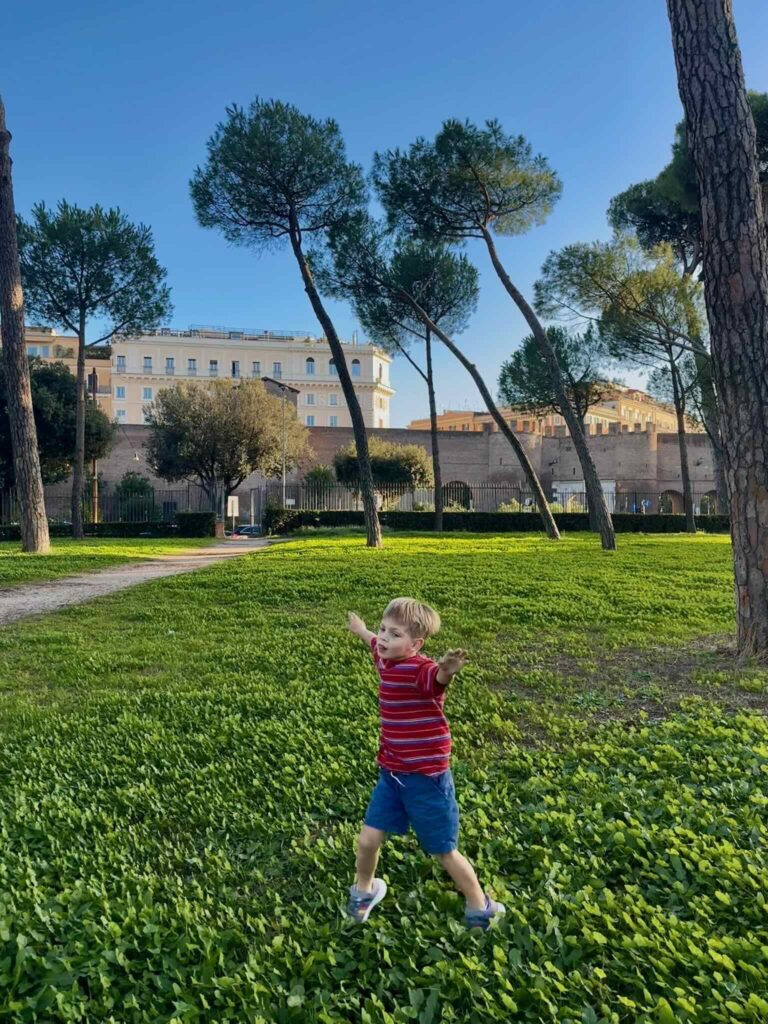
This park is one of the best things to do in Rome with kids, full stop. Think of it as Rome’s Central Park, but arguably more charming. There is a playground, a small zoo called the Bioparco, pedal boats you can rent on the lake, electric bike rentals with kids’ seats, and a little train that loops through the park when small legs are done walking.
How to Spend a Day at Villa Borghese
A good approach is to start the morning with a bike rental and ride through the park before it gets busy. Most rental spots require an ID, so keep that handy. After a couple of hours of exploring, the park cafés are a solid option for a relaxed lunch before letting the kids loose at the playground.
For families who love animals, the Bioparco is worth building into the day. It’s compact enough to do in a couple of hours and has a good mix of animals without being overwhelming. The pedal boats on the lake are another hit with young kids, and the little train that loops through the park is a great option when small legs are done walking.
Piazza Navona
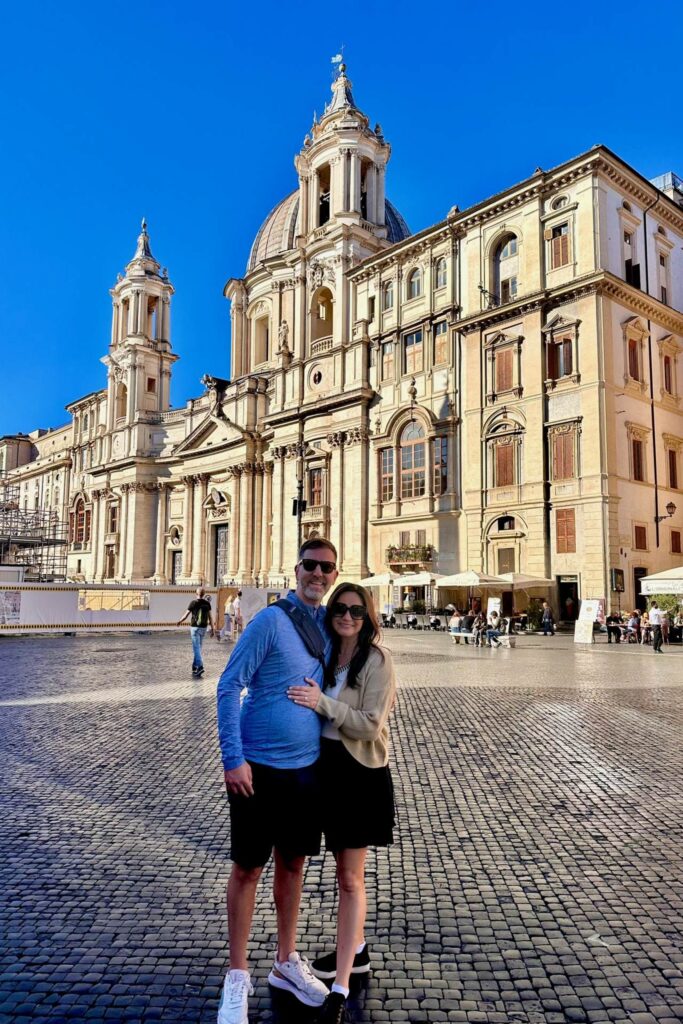
Piazza Navona might not be the first thing that comes to mind when you think about Rome with kids, but it earns a spot on the list every time. It is one of the most beautiful squares in Italy, with Bernini’s famous Fountain of the Four Rivers right at the center, but for young kids, it’s basically a giant outdoor living room.
There’s space to run, street performers to watch, gelato carts, and if you time it right, bubble vendors near the fountain.
The square is pedestrian-only and the energy at dusk is wonderful. It’s also an easy walk from most hotels in the historic center, so it became our natural endpoint for the day.
A Scavenger Hunt ArtLab Tour
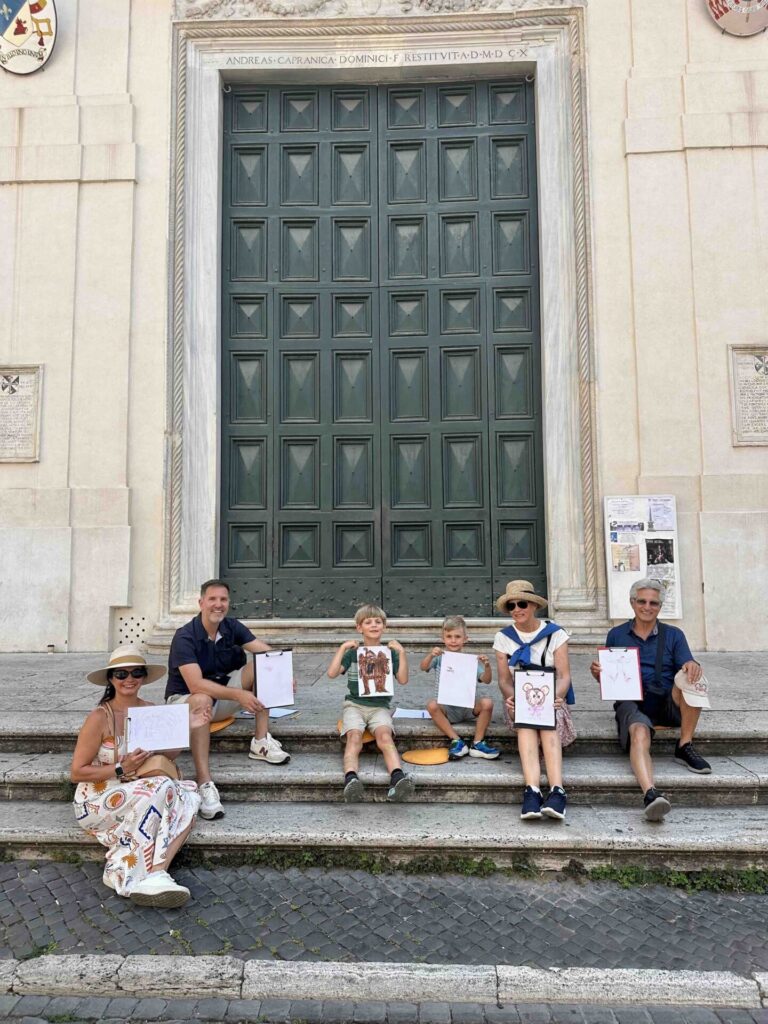
Instead of just walking past Rome’s legendary landmarks like the Trevi Fountain and Piazza Navona, we booked a private 2.5-hour Scavenger Hunt ArtLab Tour with AJ’s Little Artists. AJ is a local art historian, who expertly turns the historic city center into an open-air laboratory.
Our kids were given a scavenger hunt sheet to track down hidden animal sculptures carved into fountains, churches, and buildings. My five-year-old was totally locked in tracking down everything from lions and turtles to unexpected ones like an armadillo and an elephant.
While the kids tracked animals, the adults got the deep-dive history. My husband loved the anecdotal stories behind the architecture, like how Bernini deliberately faced his elephant statue’s backside toward a rival priest’s front door in Piazza della Minerva. Even though I’ve been to Rome three times, we were noticing gems hidden in plain sight that I had completely missed before.
What makes this truly unique is that it’s sightseeing meets art-making. AJ brings art supplies and cushions, finding perfect shady spots directly in front of the landmarks, so the kids and adults can sit and color their own custom masterpieces. My mom loved how effortlessly AJ brought the children into the experience while making the history fun for all three generations. By the end, it felt less like sightseeing and more like a core family memory.
Golf Cart Tour of Rome
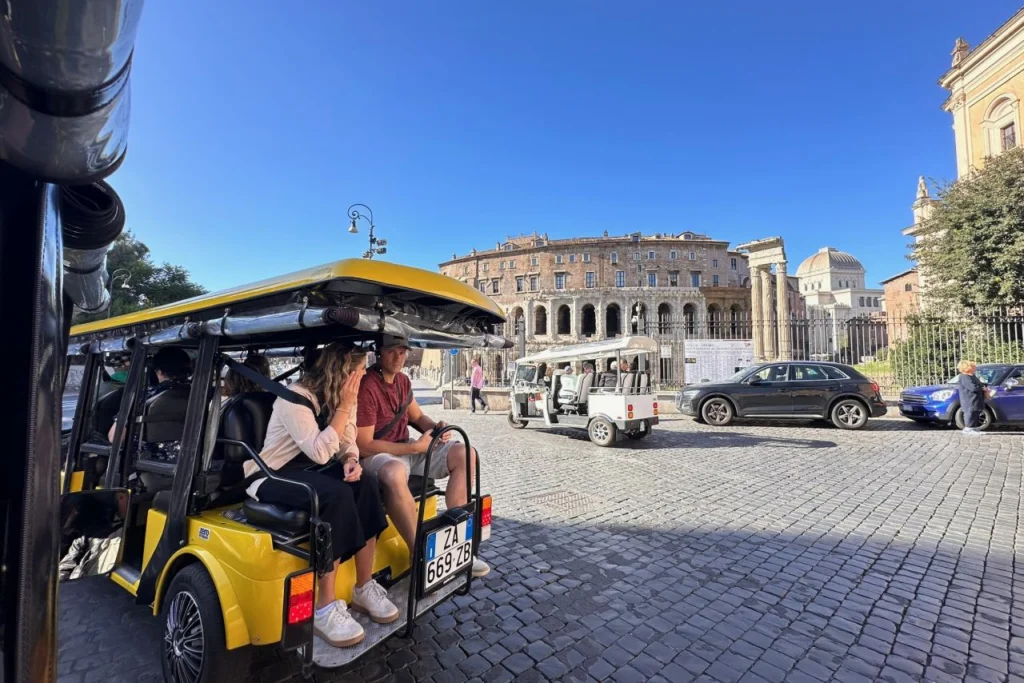
One of the most unexpectedly fun things we did in Rome was a golf cart tour, and it turned out to be one of the best decisions of the whole trip for families with young kids. Instead of navigating taxis (and the car seat question that comes with them) or walking long stretches between sights, you load everyone into a covered golf cart with a local guide and cover a huge amount of the city in a relaxed, low-effort way.
We passed through neighborhoods and past landmarks we might have skipped on foot, and the kids loved riding around town. No car seats required, no stroller logistics, just a comfortable way to see the city together.
Tours typically run a couple of hours and cover the main highlights of the historic center. Look for family-friendly options that let you customize the route or make stops along the way.
The Pantheon
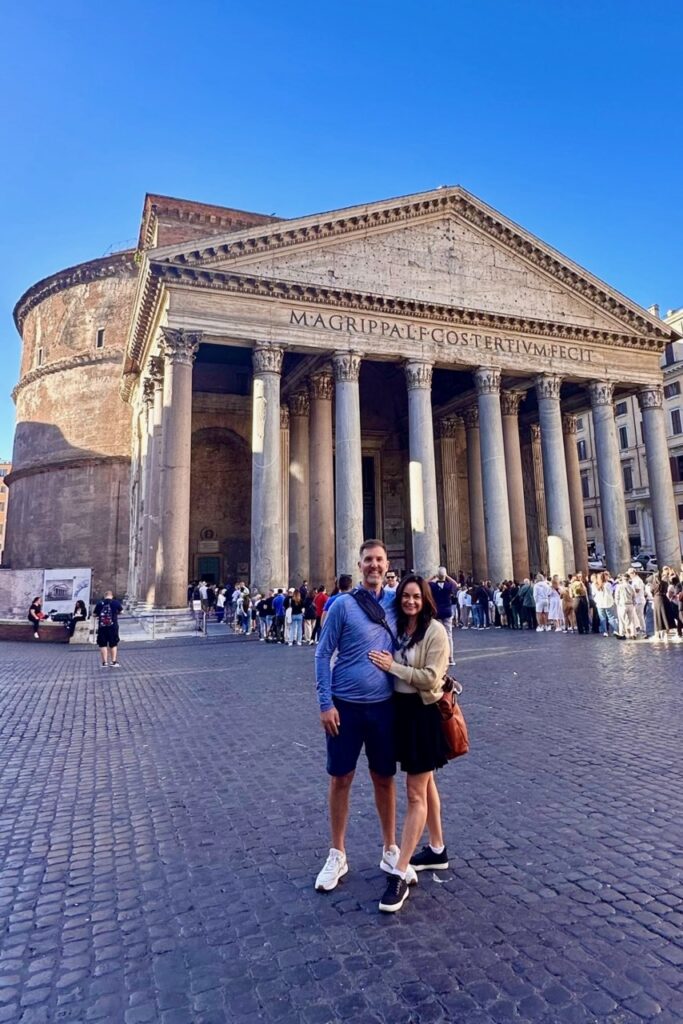
Nearly 2,000 years old and still standing with its original dome intact. The Pantheon is arguably the best-preserved ancient building in Rome, and walking through those bronze doors puts the scale of Roman engineering right in front of you.
The oculus is a 9-meter wide opening at the top of the dome that lets in natural light and, when it rains, water falls straight through onto the marble floor below. To handle it, Roman engineers designed the floor with a slight convex curve sloping down from the center, with 22 hidden drainage holes built in to move the water out efficiently. A 2,000-year-old drainage system that still works today. That’s the kind of detail that makes the Pantheon worth explaining to your kids before you walk in.
What to Know Before You Visit
Tickets are required and must be booked in advance. There’s no stroller access inside, so plan to fold yours or wear your youngest in a carrier. The visit itself is relatively short, maybe 30 to 45 minutes, which is perfect for the attention span of young kids. Pair it with a gelato stop just outside and you have a happy post-visit situation.
Castel Sant’Angelo
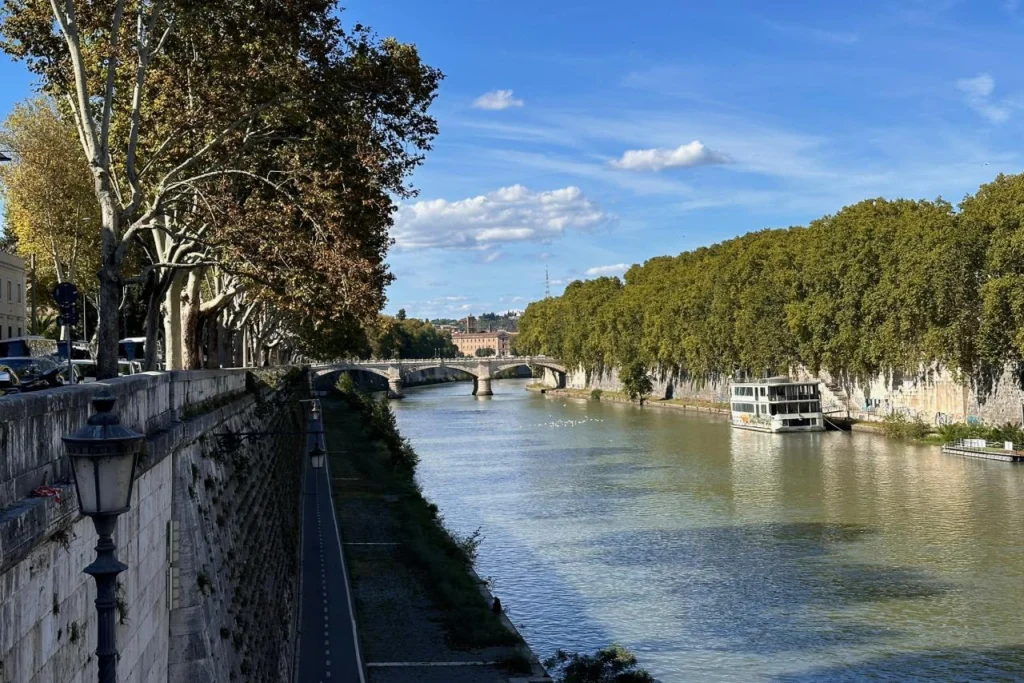
Castel Sant’Angelo looks like a castle, functions like a fortress, and has enough spiral ramps, towers, and old cannons that kids treat it like a giant adventure playground. There’s a small playground within the castle grounds, too, which is handy if you need a break mid-visit. The views from the top over the Tiber and back toward St. Peter’s are genuinely beautiful.
Visiting with a Stroller
The ramps inside are manageable for most strollers, though some sections are steep. I’d recommend leaving the stroller at the entrance and wearing your child if they’re not walking confidently yet, or keeping close hold on little ones who might sprint toward the ramparts.
Monument to Victor Emmanuel II
Romans call it the Vittoriano, and visitors have a few less flattering nicknames for it, the Wedding Cake and the Typewriter being the most common, which gives you a sense of how divisive this building is among locals. But for families visiting Rome with kids, it earns its spot on the list for a simple reason: the rooftop view is one of the best in the entire city, and getting up there is genuinely fun for kids.
A panoramic glass elevator takes you to the top terrace, where you get sweeping views over the Imperial Fora, the Pantheon, St. Peter’s Basilica, and Via del Corso. It’s the kind of panorama that helps young kids start to piece together the geography of everything they’ve been seeing at street level.
The monument itself is enormous: 135 meters wide and 70 meters tall, built from white marble with Corinthian columns, grand stairways, and bronze statues crowning the top. It was built to honor Victor Emmanuel II, the first king of a unified Italy, and since 1921 it has also housed the Tomb of the Unknown Soldier, guarded day and night by two sentinels. The changing of the guard happens every hour and is worth timing your visit around.
Practical Tips
- Entry to walk around and climb the stairs is free.
- The panoramic elevator to the top terrace has a small fee.
- If you’re just heading up for the view, about 30 minutes is plenty.
- The monument sits right at Piazza Venezia, which makes it an easy add-on if you’re already heading toward the Roman Forum or the Pantheon.
Explora Children’s Museum
When you need a break from sightseeing, Explora is the answer. Located on Via Flaminia 82, within walking distance of Piazza del Popolo, it’s Rome’s children’s museum built entirely around the idea that play is a tool for learning and discovery. The exhibits cover science, nature, technology, and hands-on sensory experiences, and the whole place is designed to feel more like an adventure than a classroom.
Visits run on a timed schedule across four daily sessions: 10:00 to 11:45, 12:00 to 13:45, 15:00 to 16:45, and 17:00 to 18:45. Each session lasts 1 hour and 45 minutes. Tickets need to be booked in advance, as spots fill up, especially during school holidays. The museum is closed on Mondays. Worth packing your own snacks just in case. If you hit a hot afternoon or a rainy day, this is where to go.
A Pizza or Pasta Making Class
This is the kind of thing to do in Rome with kids that they will talk about when they get home. Hands-on cooking classes designed for families are widely available and they are genuinely fun, not just for the kids but for everyone. Most run for a couple of hours and end with eating what you made, which is the best part.
Trastevere Neighborhood Wander
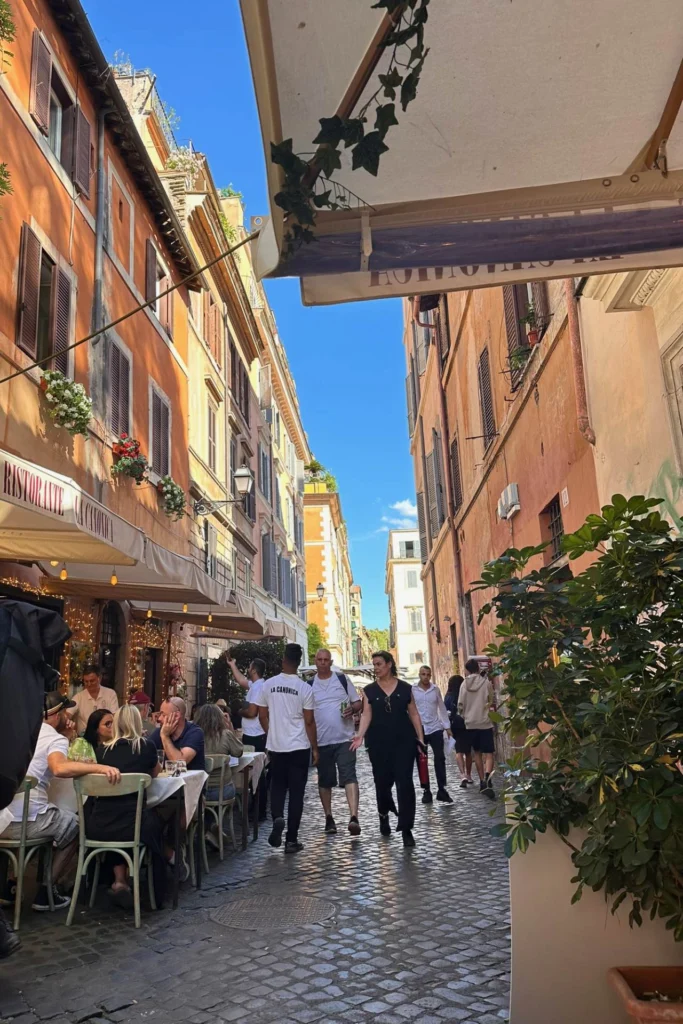
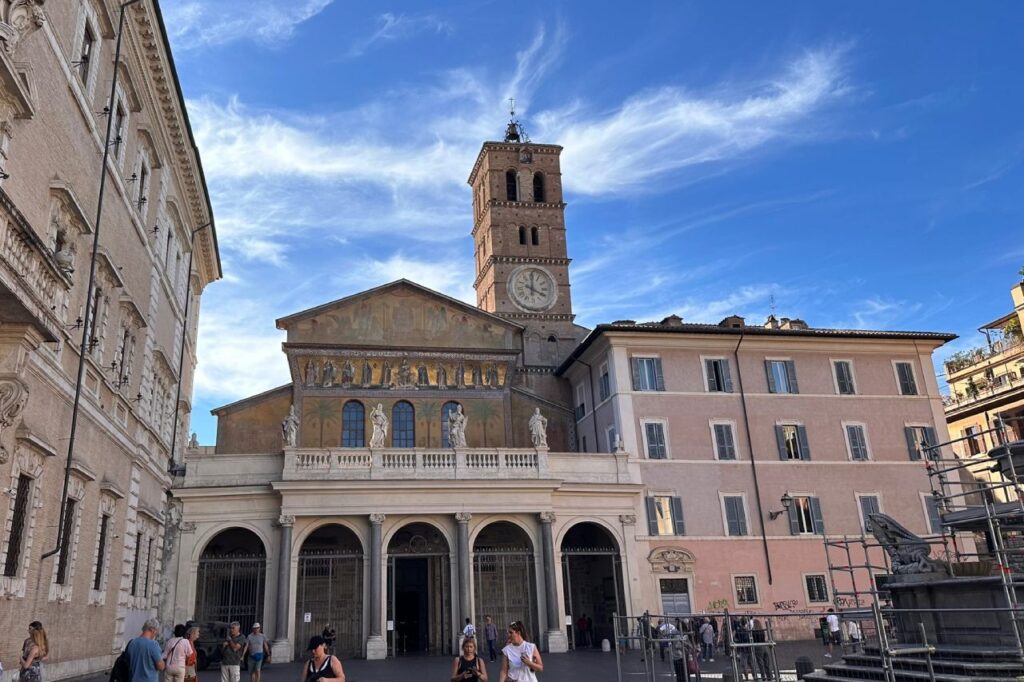
Trastevere sits just across the Tiber from the historic center and feels like a completely different city. Cobblestone alleys, ivy-covered facades, laundry strung between windows, and a pace that has nothing to do with tourist itineraries. It is the kind of neighborhood that rewards slow walking and no particular plan, and it also happens to be one of the best places in Rome to sit down for a real meal.
What Makes It Good for Kids
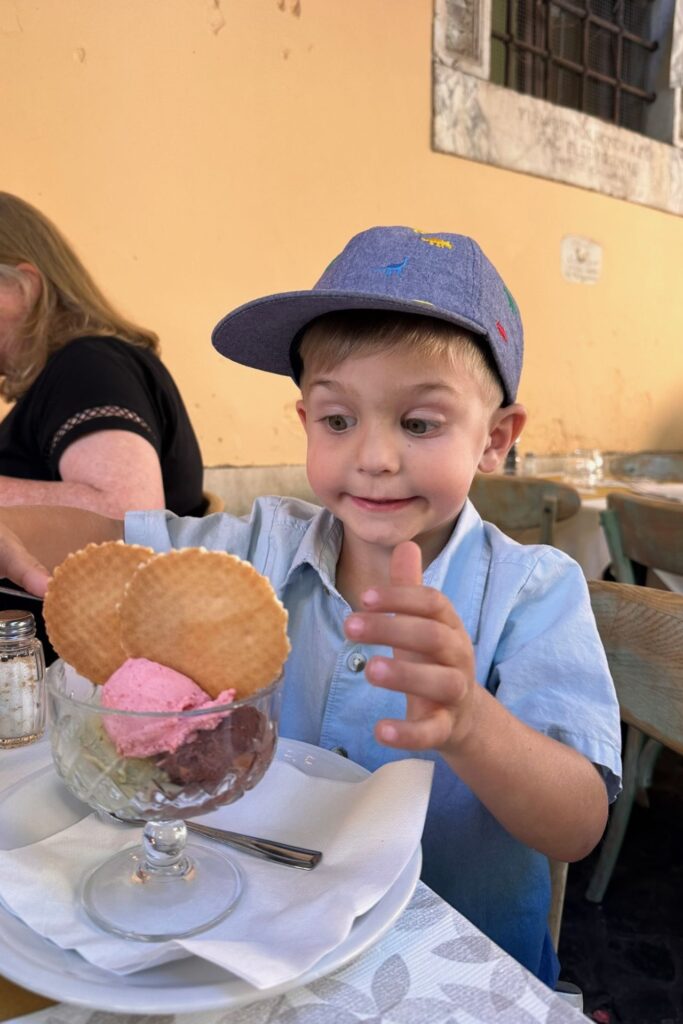
Piazza San Cosimato has a playground that is perfect for burning off late-afternoon energy before dinner. The outdoor trattorias here are relaxed and unhurried. For gelato, look for shops labeled “gelato artigianale,” which signals it is made in-house with real ingredients rather than the puffed-up brightly colored versions near the major tourist sites. Google Maps ratings are your friend here.
Vatican City and St. Peter’s Basilica
Vatican City is technically its own country, which is one of those facts that lands surprisingly well with curious kids. There are no passport controls and no real border crossing to worry about, so for practical purposes you simply walk in from Rome. The area breaks down into a few distinct parts, and how much you tackle depends entirely on the age and energy of your kids.
St. Peter’s Square
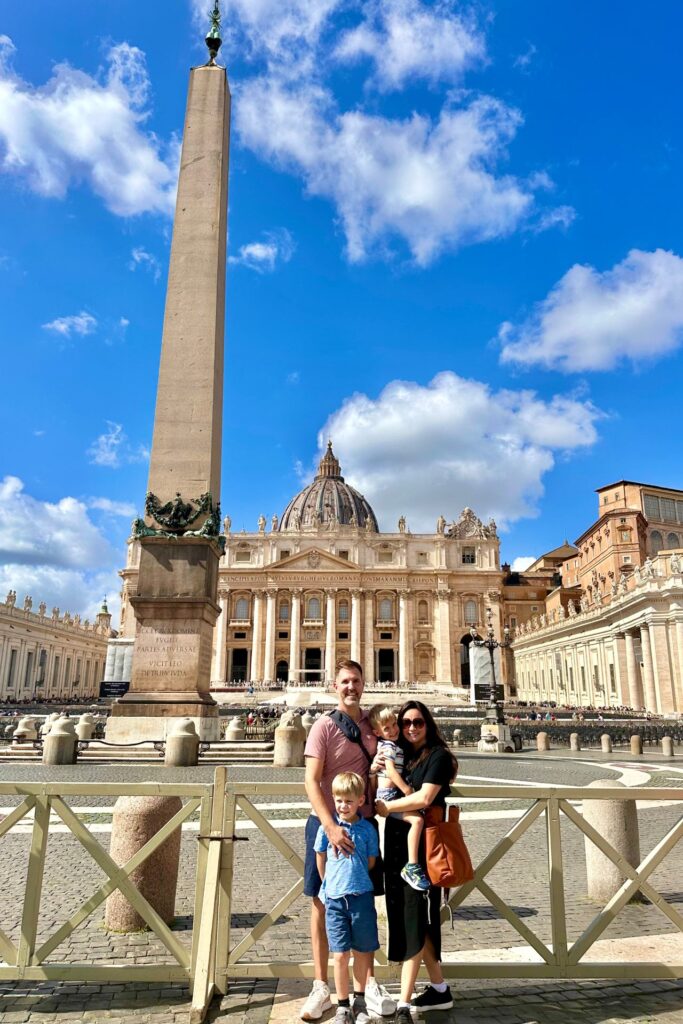
St. Peter’s Square is a massive pedestrian-only space with plenty of room to move around, impressive columns on all sides, and vendors nearby if you need snacks to keep things moving. This is genuinely the easiest part of the Vatican to enjoy. No tickets, no queues, no time pressure. Just an enormous beautiful square with one of the most iconic facades in the world in front of you.
St. Peter’s Basilica
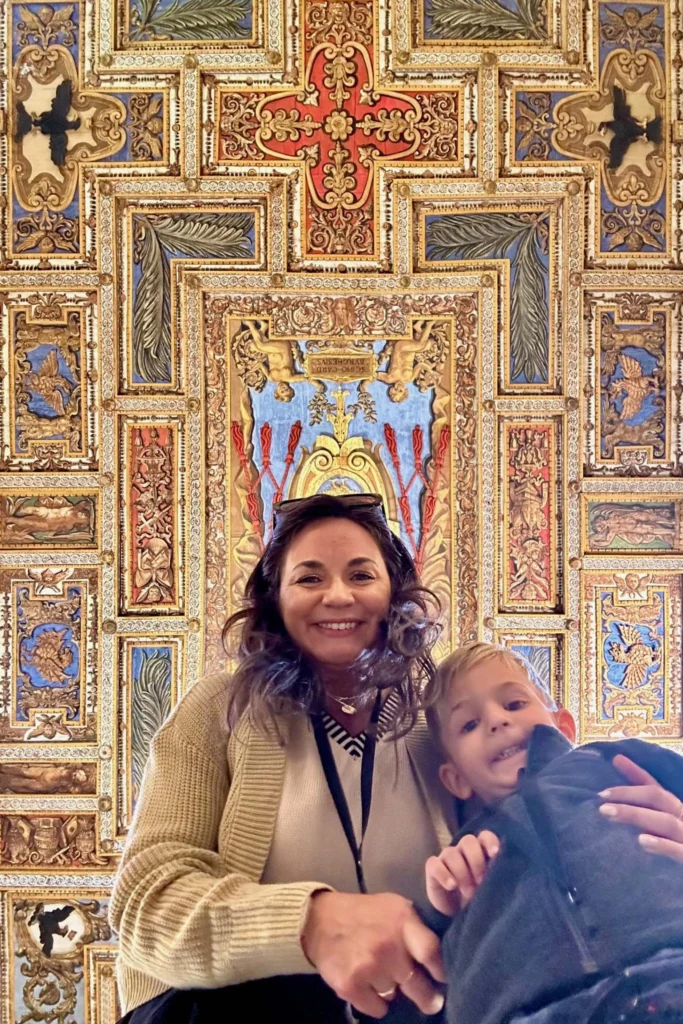
Entrance to the Basilica is free, though no tickets are required to get in. Some skip-the-line tickets are available and worth considering, since everyone still passes through security regardless. Arrive early, ideally before 9am, to keep the queuing to a minimum. The Basilica is enormous and the decoration is elaborate enough to hold a young child’s attention in a way that most museums do not.
A few practical things to know before you go: strollers are not allowed inside, so plan to check yours at the cloakroom or use a carrier. Food and drinks are also not permitted inside, so feed and water everyone beforehand. The dress code is strict and applies to kids, too: shoulders and knees covered for everyone, no exceptions. Pack a light scarf or layer in your bag to avoid being turned away at the entrance after waiting in line.
The Vatican Museums and Sistine Chapel
This is where you need to be honest with yourself about your kids. The museums involve slow-moving crowds, a lot of walking, and a sheer volume of art and artifacts that is genuinely overwhelming for young children. If visiting the museums is important to you, the best approach is to book a family-friendly guided tour with skip-the-line access. Some tours include interactive kids booklets with activities and quizzes that keep younger visitors engaged through the galleries, the Raphael Rooms, and Michelangelo’s Sistine Chapel ceiling. Without a guide, it is a long and disorienting experience even for adults.
Vatican Museums tickets are released 60 days in advance and sell out fast, so book as early as possible once your travel dates are confirmed.
Tips for Getting Around Rome with Kids
Rome is mostly a walking city, especially in the historic center. Taxis and ride-shares are easier than buses when you have a stroller because buses require you to fold everything up in a crowd. The metro has limited coverage in the historic areas (ancient underground infrastructure gets in the way), so don’t count on it as your primary way around. However, it can be useful in some areas, but you will be carrying your stroller up and down the stairs to enter and exit, if you bring one.
Keep your days flexible enough to walk back to your home base for downtime. One big activity in the morning, a slow lunch, a rest, and then something lower-key in the afternoon is a schedule that works really well. Rome is not a city you need to race through, and the pressure to see everything in one trip is the fastest way to make everyone miserable. Italians are all about slowing down and enjoying life, so embrace that part of the culture.
A few coins for bathroom entry are worth keeping in your bag. Many public restrooms in tourist areas charge a small fee, and scrambling for change with an urgent kid is its own kind of adventure.
Things to Do in Rome with Kids: Packing Tips
Beyond your usual travel gear, a few things can make your trip noticeably easier. A sturdy-wheeled stroller over an ultra-light umbrella stroller for the cobblestones. A carrier for the stroller-restricted sites. A small day bag with snacks, water, and a change of clothes for the inevitably messy gelato moments.

Final Thoughts
Rome rewards the families who slow down, and that is really the secret to making Rome with kids so memorable. The city has a way of delivering its best moments between the sights: a piazza stumbled upon at dusk, a gelato eaten on the steps of a fountain, a side street that leads nowhere in particular but looks like a painting. Build in the downtime, keep the days flexible, and let the city do some of the work. That is the trip worth planning.
If you’re working on your Italy itinerary and want ideas beyond Rome, I also have a full post on things to do in Positano with kids that’s worth reading before you book. And if you’re thinking about using points to cover the flights or hotels, check out my guide on the Capital One Venture Rewards card, which is what I use to make trips like this actually work on a real budget.
Have questions about our trip or want to know more about any of these spots? Send me a message or DM me on Instagram. I’m always happy to help
-
How to Plan Genealogy Trips: Free Step-by-Step Guide to Finding Your Roots
I will be honest with you: some of the most meaningful travel I have ever done had nothing to do with a famous landmark or a bucket-list city. It happened in tiny towns most people have never heard of, standing in the exact spot where my family started. That is the magic of genealogy trips. You are not just sightseeing. You are walking into your own story.
-
7 Best Things to Do in Positano With Kids
Positano might just be the most postcard-perfect town in Italy, but is it doable with kids? I visited a few years ago (pre-kids!) and have dreamed of going back ever since. Now, with a family in tow, I’m planning a return trip and researching everything to make Positano doable, fun, and family-friendly.
If you’re wondering how to make the most of this iconic destination with your family, here’s everything you need to know. From easy beach days and gelato breaks to boat rides and nearby towns, these are the top things to do in Positano with kids, parent-friendly tips, and a little firsthand perspective.